
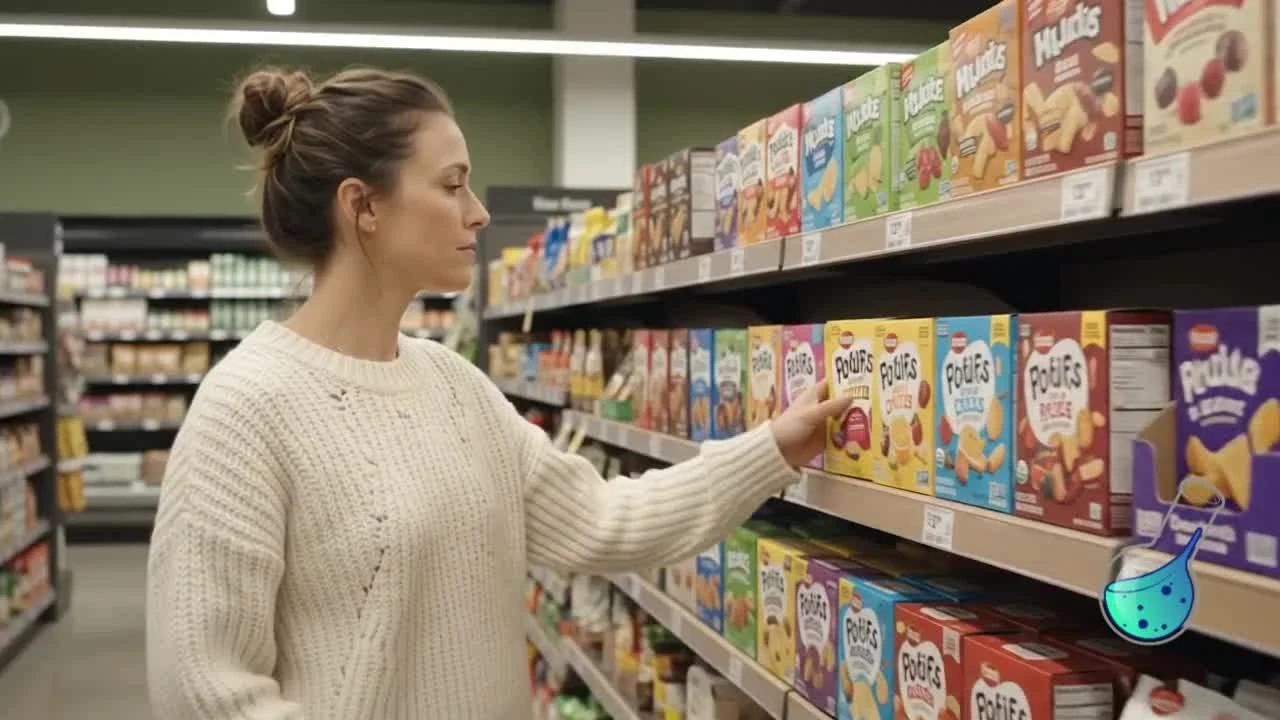
A parent picking up a fruit snack may see natural flavors and picture fruit. Someone with a food allergy may read the same words and need a more urgent answer: natural flavors from what? The ingredient list often cannot answer either question. That gap matters, but it does not mean every natural flavor is harmful.
Under U.S. rules, “natural flavor” describes a flavoring's source and purpose. It can come from plant or animal material and is used chiefly to add flavor, rather than nutrition. The rule permits a product to list the flavor under the collective term instead of naming every flavor component. “Natural” therefore does not mean “made from the fruit pictured on the package,” and the phrase alone does not reveal a formula. FDA flavor-labeling regulation.
The question an allergy label can answer
Broad claims about hidden ingredients often miss a crucial protection. If a flavor contains an ingredient derived from one of the nine major U.S. food allergens, the allergen’s source generally must be declared, even when that ingredient is part of a flavor. FDA’s January 2025 guidance addresses how manufacturers must apply those requirements; sesame joined the major-allergen list in 2023. A package that says “natural flavors” is not a legal permission slip to conceal a major allergen. FDA allergen-labeling guidance, January 2025.
Still, a shopper may need information beyond those nine allergens. What if a clinician has asked someone to avoid a particular ingredient, or a person has reacted to a food that is not on the major-allergen list? “Natural flavors” alone may not identify the relevant source. For a medically necessary avoidance, the sensible next step is to ask the manufacturer about the specific product and ingredient of concern, and follow the treating clinician’s advice. The label is a starting point, not a complete ingredient dossier.
The stakes of accurate disclosure are concrete. In 2025, FDA posted a recall for packaged buns because milk was undeclared. That notice does not establish that natural flavors caused the error. It does show that an allergen declaration must be judged by its accuracy, not merely by whether a package looks reassuring. FDA recall notice.
A second question: who reviewed the substance?
Flavor labeling and ingredient safety are related, but they are different questions. The words “natural flavors" do not tell a shopper which substances were used or how the safety of each use was established.
A 2026 Guardian investigation reported an Environmental Working Group analysis of substances used in foods without FDA review of their safety determinations. That finding deserves scrutiny, but it should not be read as evidence that 111 natural flavors are dangerous. The analysis concerns the broader U.S. system for substances considered generally recognized as safe, or GRAS; it does not test the flavor mixture in a particular snack. FDA’s explanation of GRAS.
The policy is moving. In August 2026, FDA proposed changes intended to increase oversight and transparency for GRAS substances. As of September 2026, that is a proposal, not a completed overhaul. Nor would a change to GRAS reporting, by itself, make every flavor formula appear on a retail ingredient list. FDA’s GRAS update and proposed-rule information.
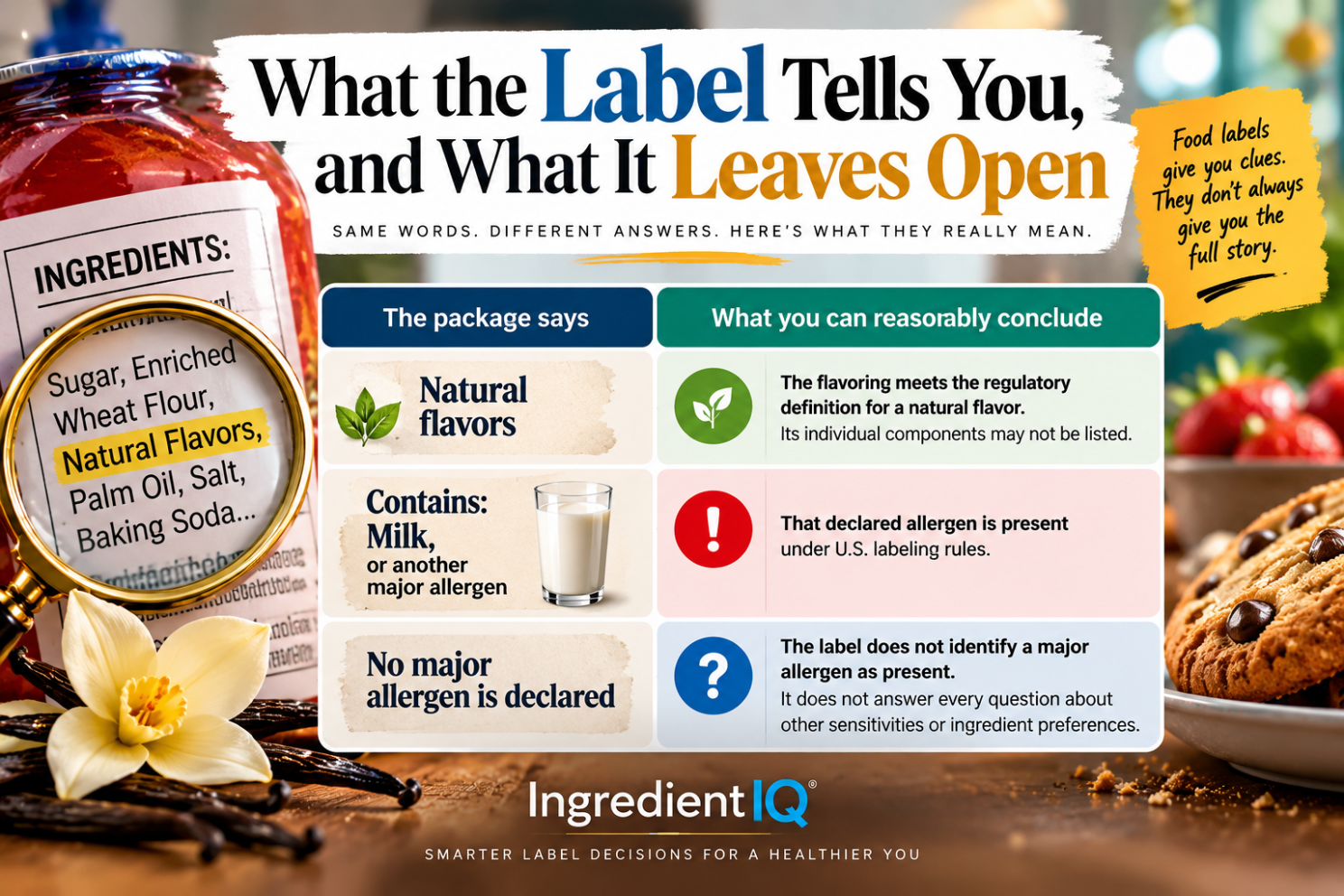
The defensible concern is limited visibility, not a blanket verdict that natural flavors are toxic. A substance's effects depend on what it is, how much is present, how it is used, and who consumes it. A vague label cannot establish harm. It also cannot supply those missing facts.
For a shopper, that distinction changes the question from “Are natural flavors bad?" to "What do I need to know about this product, and does its label actually tell me?” IngredientIQ's stated approach starts with the disclosed label and checks it against a person's stated needs, while keeping unknown ingredients marked as unknown. That restraint matters: no label decoder can identify a proprietary flavor formula from two words on a package.
If you shop for a household:
Check the allergen declaration and full ingredient list each time, especially when a formula or package changes. Contact the manufacturer when a specific avoidance need remains unresolved.
If you counsel patients:
Distinguish a declared major allergen from an undisclosed flavor component, and document the exact product when investigating a suspected reaction.
If you report on food labeling:
Ask which part of a claim concerns the flavor definition, which concerns allergen disclosure, and which concerns safety review. They require different evidence.
Follow IngredientIQ on its social channels for early-access updates and continuing coverage of food-label decisions.
#NaturalFlavors #FoodLabeling #IngredientTransparency #FoodAllergies #AllergenLabeling #FoodSafety #GRAS #ConsumerHealth #LabelLiteracy #FoodPolicy #IngredientIQ #DecodedByIngredientIQ