
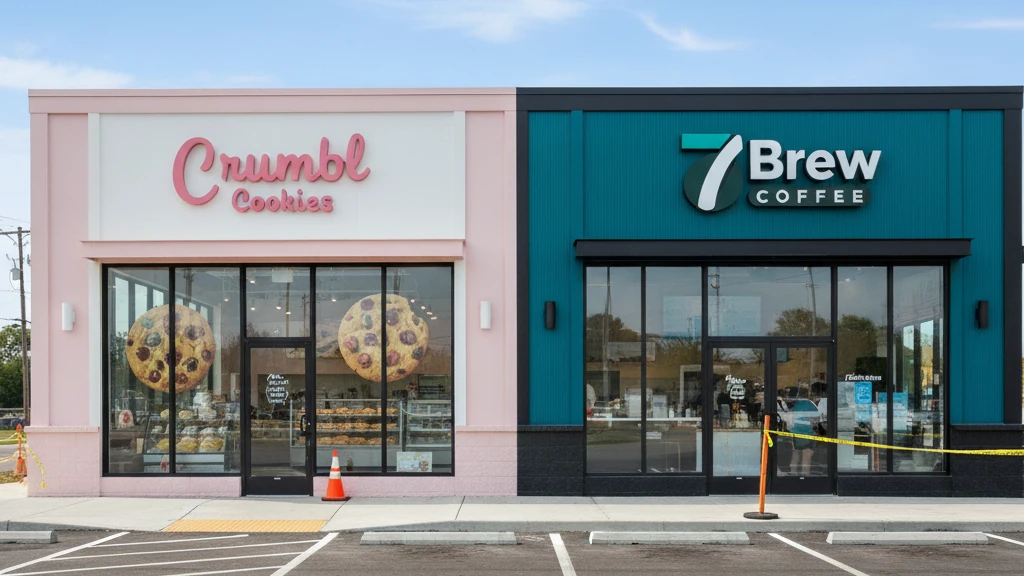
In a move that signals more than just dessert and caffeine on the Eastern Shore, Salisbury, Maryland has scored dual openings: the much‑buzzed bakery Crumbl Cookies and the fast‑growing drive‑thru coffee chain 7 Brew Coffee . The arrival of both brands highlights not only shifting consumer tastes but how social‑media‑fueled franchise models are now branching into mid‑sized markets.
When locals drive past The Commons shopping centre (2717 N Salisbury Blvd) in Salisbury, they’ll soon see the pink‑and‑black boxes of Crumbl Cookies stacked alongside the freshly paved drive‑thru of 7 Brew. Crumbl is expected to open as early as next month, marking its first Maryland Eastern Shore location. Simultaneously, 7 Brew has leased a former bank site at 1503 S Salisbury Blvd (corner of Route 13 and Milford Street, near Salisbury University), bringing its handcrafted coffee, smoothies and energy‑drinks model to the region (TechStock²+1). What makes this pairing stand out: both brands are explicitly leveraging TikTok‑era cultural momentum — rotating cookie flavors, drive‑thru speed, and social‑first marketing. (FoodChain Magazine)
Why This Matters
Franchise Expansion into “Second‑Tier” Markets
Historically, flashy national chains targeted large metro areas; now, brands like Crumbl and 7 Brew are eyeing places like Salisbury. Analysts say this shift reflects saturation in major metros plus the need to find new growth corridors. The fact that Crumbl is opening its first Eastern Shore unit and 7 Brew is branching into Delmarva region is a clear sign of the trend. (TechStock²+1)
The Power of Instagram and TikTok
Crumbl’s model relies heavily on rotating flavors (released weekly) and viral unboxing‑style content. As FoodChain Magazine puts it: “the chain’s rise is fuelled by influencer culture … unboxings, taste‑tests and reviews flood TikTok every week.” FoodChain Magazine 7 Brew, while less dessert‑centric, similarly uses a youthful, energetic tone and quick‑service format that resonates on social feeds. The pairing of these two brands in one locale demonstrates how social‑first strategy is influencing physical retail and F&B site selection.
Local Economic & Real‑Estate Implications
Real‑estate advisor Kelly Jeter (with SVN Miller Commercial) is quoted saying Crumbl’s “changing menu … viral flavours” will be “a welcome addition to the Salisbury community”. For landlords and local officials, the announcements signal incoming foot traffic, job creation (bakers, baristas, counter staff) and increased appeal for retail space repurposing in shopping centres and drive‑thru strips.
Broader Context: Industry Trends
- Drive‑thru coffee is a booming segment: data suggest that a high percentage of U.S. coffee purchases now occur in quick‑service/drive‑thru formats. (See data referenced by industry sources TechStock²)
- Dessert‑centric fast‑casual brands are using social media to accelerate adoption and rapid franchising. Crumbl claims over 1,100 North American stores and was reportedly exploring a $2 billion valuation (TechStock²+1).
- Retail developers are increasingly focusing on brand‑experience, visual‑appeal, and “Instagrammable” storefronts, rather than just pure functionality.
What This Means Economically for Stakeholders
- Consumers: Access to national‑brand novelty in a smaller market means more choice, and the chance to try trending cookies or coffee formats without travelling. For families or students in the Salisbury region, it’s a tangible upgrade in food & beverage options.
- Local Businesses: Existing independent bakeries, cafés and dessert shops may face new competition; they may need to emphasise locally‑rooted differentiation (unique flavors, community ties) versus social‑media‑driven franchises.
- Real‑Estate & Local Government: The deals could attract further investment, signalling confidence in the local economy; but they also emphasise that location fundamentals (traffic, demographics, visibility) remain crucial.
- Franchise Investors: This example reinforces the notion that emerging brands are targeting so‑called “underserved” secondary markets, where the bar for national brand presence is still relatively low.
The IngredientIQ Lens:
What’s Actually Inside Those Cookies and Coffees? And Why Aren’t We Talking About It?
While Crumbl and 7 Brew ride the wave of TikTok virality and rapid expansion, neither franchise discloses full ingredient transparency on-site or online. This is not just a matter of curiosity, it’s a regulatory gray zone that hides potentially concerning additives behind phrases like “natural flavors” or “proprietary blend.”
Crumbl’s Ingredient Red Flags
- Crumbl’s signature rotating cookies routinely contain artificial colorants (Red 40, Yellow 5/6, Blue 1), as verified by consumer lab tests and TikTok reviews dissecting packaging.
- Many cookies feature high fructose corn syrup, emulsifiers, and artificial flavors, especially in frosted varieties.
- Some editions contain ingredients tied to hyperactivity in children, according to European Food Safety Authority (EFSA) and FDA notices (e.g., Red 40). (FDA Color Additives) (EFSA Additive Opinions)
7 Brew’s Chemical Caffeine Culture
- 7 Brew markets drinks like “Fizzle” and “Seven Fizz” that feature proprietary energy blends, but don’t clearly disclose caffeine dosage or the presence of synthetic stimulants.
- Their syrups and flavor shots are not transparent—no allergen or additive declarations are visible at the point of sale.
- Many of their energy drinks may exceed safe upper caffeine limits for adolescents, especially when stacked with sugar, per recent The National Institutes of Health and Centers for Disease Control and Prevention alerts. (NIH Caffeine Data)
- The combination of ultra-sweetened drinks + hidden caffeine presents health risks for youth, pregnant consumers, and individuals with metabolic conditions.
Why It Matters More in Smaller Cities
In places like Salisbury, where independent cafes or bakeries might use recognizable pantry staples, this kind of franchise-driven opacity becomes a public health blind spot. These products are marketed as “fun” or “trendy,” yet many families have no clear way of knowing what’s really inside.
IngredientIQ believes it’s not just about calories, it’s about chemical transparency, regulatory accountability, and empowering families to make informed choices.
How IngredientIQ Steps In
IngredientIQ decodes what big brands won't tell you, whether you're buying cookies for your kids or grabbing a coffee en route to class. Our real-time AI scanning flags:
- FDA-regulated colorants and food dyes
- EFSA opinions on flavoring agents
- Additive safety thresholds by age group
- Known allergens hidden in proprietary blends
- Sugar and caffeine overload risks
We map that data to your needs, parent, educator, clinician, athlete.
Whether it's a “Strawberry Shortcake Cookie” from Crumbl or a “Caramel Blondie Breve” from 7 Brew, IngredientIQ can tell you what's under the frosting.
Hashtags
#FranchiseTrends #FoodServiceInnovation #RetailRealEstate #SocialMediaMarketing #FoodRetailExpansion #DriveThruCoffee #DessertCulture #LocalEconomy #SalisburyMD #CrumblCookies #7Brew #ConsumerBehaviour