
Decoded by IngredientIQ
The Newsletter That Unmasks What’s Really in Your Food
Sweet Deception: What the Girl Scouts’ New Cookie Tells Us About Ingredient Transparency in Kids’ Foods
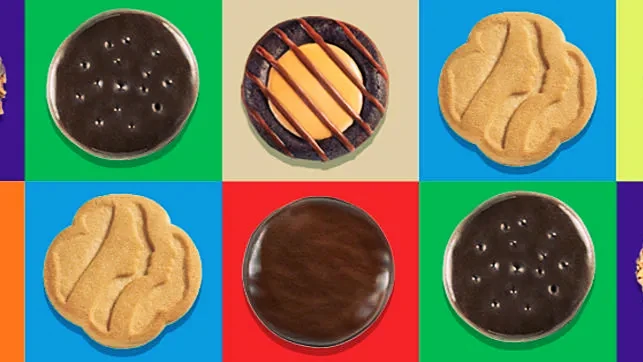
Just in time for cookie season, the Girl Scouts of the USA have unveiled “Exploremores,” a Rocky Road–inspired treat meant to channel the spirit of discovery. But behind the toasted almond crème and marshmallow notes lies a far more pressing exploration, one into the mounting health risks and regulatory gaps surrounding child-targeted indulgences in the U.S. food system.

Each year, nearly 700,000 Girl Scouts participate in cookie sales. It's a beloved tradition, one that teaches entrepreneurship and community engagement. But that same tradition may be packaging a more dangerous lesson: trust the label, don’t question the ingredients.
The debut of “Exploremores” is a perfect moment to examine what’s not being disclosed about food chemicals marketed to children, and why regulators, researchers, and health advocates are sounding the alarm.
The Problem Isn’t Just Sugar—It’s the Unseen Chemical Cocktail
According to The Guardian, U.S. food manufacturers may contain lead, arsenic, cadmium, aluminum and mercury at levels that often exceed regulators’ recommended limits, as well as concerning amounts of a toxic herbicide, a new class action lawsuit alleges. The Girl Scout cookie lineup, while nostalgic, is no exception. Artificial flavors, emulsifiers, and colorants are common ingredients.
Many of these compounds are banned or heavily restricted in the EU and other countries. Yet U.S. labeling laws permit umbrella terms like “natural flavors” and “artificial color,” which can mask dozens of chemicals in a single phrase.
Key example:
According to an EFSA report published in 2021, titanium dioxide (E171), a whitening agent used in many cookies and frostings, was deemed unsafe due to its potential genotoxicity. The EU banned it. The U.S. FDA , however, still permits it—largely due to outdated safety data from decades past.
Kids Are Especially Vulnerable, And Regulators Know It
Children metabolize chemicals differently than adults. Their smaller body mass, rapidly developing systems, and higher food intake relative to weight make them uniquely susceptible to toxins, according to NIH research. The American Academy of Pediatrics warned in a policy statement that many food dyes and preservatives “may contribute to behavioral issues and hormone disruption in children.”
Yet the FDA’s oversight of food chemicals remains stuck in the past. In 1997, the FDA loosened the protocol to save resources and created the “voluntary notification” system. It allowed companies themselves to declare substances GRAS, without requiring them to tell the agency of the determination.
The nonprofit Environmental Working Group found 99% of the 766 food chemicals introduced between 2000 and 2021 avoided FDA scrutiny using the GRAS designation. But the number is likely even higher because it does not include the unreported declarations.
The Girl Scout Cookie Case Study: A Transparency Black Hole
The ingredients list for “Exploremores” hasn’t been made public yet, but previous cookie formulations from Little Brownie Bakers and ABC Bakers—who manufacture Girl Scout cookies, have included:
- Artificial flavoring compounds not individually listed or tested for cumulative effects
- Preservatives like BHA and TBHQ, flagged by EWG and the Center for Science in the Public Interest for potential carcinogenicity
- Color additives such as Red 40 and Yellow 5, which the EU requires warning labels for due to hyperactivity concerns
What’s more, the Girl Scouts do not disclose the full formulation online, instead listing only major allergens and select nutritional facts. This stands in sharp contrast to rising consumer demand for ingredient-level transparency.
Enter IngredientIQ Redefining Exploration Through Data
If we’re serious about instilling curiosity and accountability in the next generation, we must also teach young people to ask: What’s in my food? IngredientIQ enables that exploration, not with guesswork or blanket fear, but with regulatory-grade ingredient decoding powered by AI and expert-vetted databases.
Unlike food manufacturers who rely on GRAS loopholes, IngredientIQ matches ingredient disclosures to the latest FDA, European Food Safety Authority (EFSA) , and The National Institutes of Health data, identifying health flags, regulatory status, and cumulative exposure risks. Parents can scan any snack, from a Girl Scout cookie to a school lunch item, and receive actionable, science-backed insights in seconds.
The Real Spirit of Exploration Starts with the Label
It’s easy to celebrate the Girl Scouts for entrepreneurial learning and community service. But in a food system where exploration can mean exposure, to chemicals that compromise kids’ hormones, cognition, and long-term health—it’s time to update the badge criteria. Curiosity about ingredients isn’t just a wellness trend, it’s a public health imperative.
Let’s not teach kids to sell what they don’t understand. Let’s teach them to question it—and give them the tools to do so.
#FoodTransparency #FDA #Oversight #GirlScoutsCookies #IngredientSafety #EFSA #Standards #CleanLabelMovement #EndocrineDisruptors #GRAS #ChildHealthMatters #MarshmallowMarketing #SnacktimeScrutiny #IngredientIQ
Call to Action:
Parents, pediatricians, and public health advocates: it’s time to decode the labels your kids trust.
Sign up for early access to IngredientIQ’s scanning tool, follow our investigative releases, and join the movement for a safer, smarter food system.