
When a 12-year-old in Manchester collapsed after eating a “fruit-only” smoothie last spring, the allergen wasn’t exotic or obscure. It was kiwi — a fruit now recognised by the European Food Safety Authority (EFSA) as a rising cause of severe oral allergy syndrome in children.
Across the UK and EU, food allergy prevalence is climbing. The European Academy of Allergy and Clinical Immunology estimates that up to 10% of the population now has at least one medically confirmed food allergy (EAACI, 2023). What’s striking is the diversity of triggers: beyond the “Big 8” allergens, newer patterns of cross-reactivity are emerging, often linked to climate-driven pollen changes and globalised food supply chains.
Regulatory Baselines: The Big 14 in the EU
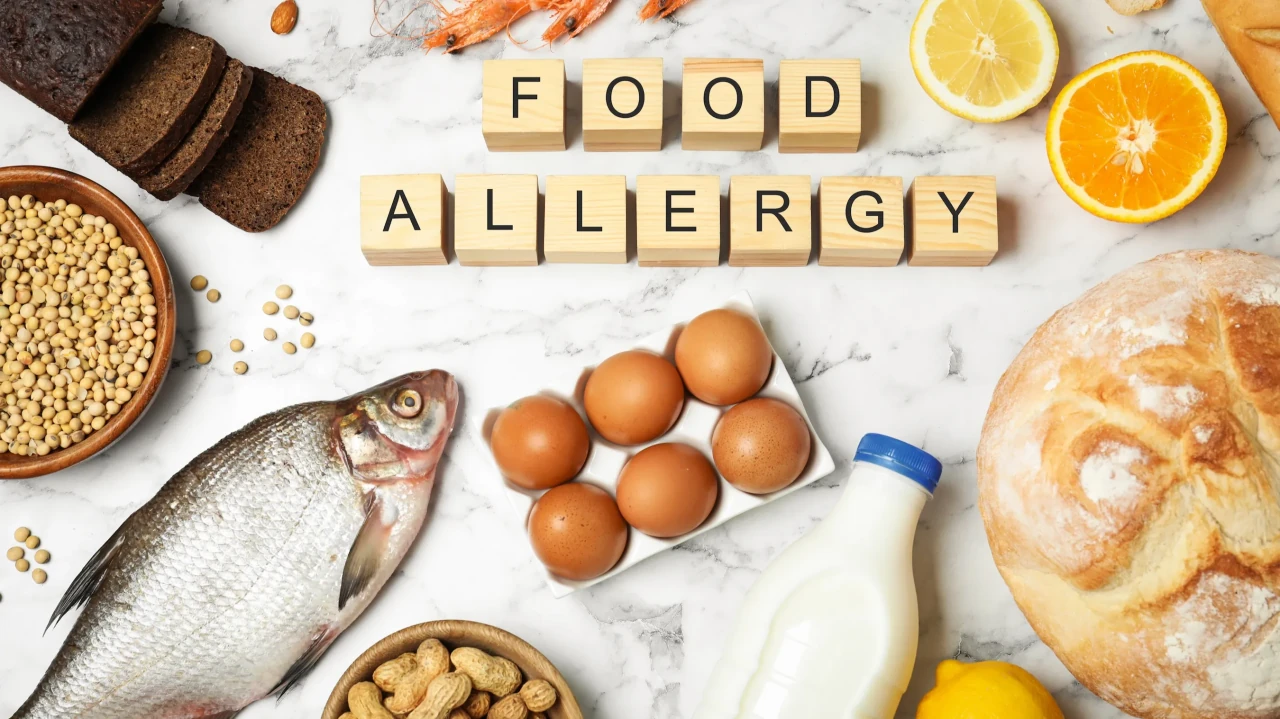
Under Regulation (EU) No 1169/2011, food businesses must declare the presence of 14 major allergens in prepacked foods, including:
- Fish
- Crustaceans (e.g., prawns, crabs)
- Molluscs (e.g., squid, mussels)
- Nuts (almonds, hazelnuts, walnuts, etc.)
- Peanuts
- Milk
- Eggs
- Gluten-containing cereals
- Soybeans
- Celery
- Mustard
- Sesame seeds
- Sulphur dioxide/sulphites
- Lupin
These overlap heavily with the list you’ve provided — fish, shellfish, nuts, fruit, gluten, milk, and legumes — but legislation doesn’t require labelling for every fruit or legume, even when severe reactions are documented.
The Science of Sensitisation
Food allergies develop through the same two-phase process as skin allergies:
- Sensitisation — initial exposure primes the immune system without symptoms.
- Elicitation — later exposure triggers IgE antibodies, histamine release, and symptoms ranging from hives to anaphylaxis.
Cross-reactivity plays a major role. Someone allergic to birch pollen, for example, may also react to apples, hazelnuts, and certain legumes due to similar protein structures. EFSA’s Compendium of Botanicals maps dozens of such cross-reactive profiles (EFSA, 2023).
Emerging Risk Patterns
- Fish & Shellfish: Tropomyosin and parvalbumin are the primary allergenic proteins. They resist heat and digestion, meaning reactions can occur even after thorough cooking.
- Tree Nuts & Peanuts: Roasting can increase allergenicity in peanuts by altering protein folding. EU and FDA thresholds for “precautionary” labelling remain voluntary.
- Fruit Allergies: Often linked to pollen-food syndrome, where immune systems mistake fruit proteins for airborne allergens. Kiwi, peach, and cherry are frequent triggers.
- Gluten & Coeliac Disease: Though distinct from IgE-mediated allergies, gluten intolerance requires strict avoidance. Cross-contact risk is high in shared manufacturing lines.
- Milk Allergy vs. Lactose Intolerance: Casein and whey protein allergies are immune-mediated and can be life-threatening; lactose intolerance is a digestive enzyme deficiency and non-allergenic.
- Legume Allergies: Lentils, chickpeas, and peas are emerging allergens, particularly in populations with heavy plant-based protein consumption.
Why “May Contain” Isn’t Enough
Precautionary allergen labelling (PAL) like “may contain traces” isn’t harmonised across the EU. EFSA’s 2024 review found that PAL statements often don’t reflect actual risk levels, sometimes appearing where cross-contact risk is negligible, and other times missing when contamination is likely.
IngredientIQ’s Approach to Allergen Transparency
Rather than stop at the legal 14, IngredientIQ:
- Screens for undeclared high-risk foods using supplier audits and ELISA testing.
- Maps cross-reactive proteins across botanical and marine families.
- Flags processing-induced allergenicity changes — e.g., roasting, hydrolysis.
This method catches allergens that regulation may miss, allowing consumers and food businesses to reduce hidden risk.
Practical Protections for Consumers
- Learn your cross-reactive risk profile — birch-pollen allergy can extend to apples, carrots, and hazelnuts.
- Don’t rely solely on “may contain” — check manufacturer allergen protocols.
- For fish/shellfish allergies, avoid buffets and fryers used for multiple proteins.
- Keep in mind that plant-based products can still contain legumes, nuts, or seeds in emulsifiers and protein blends.
The allergy map is shifting. If regulation doesn’t keep up, the onus falls on vigilant consumers — and on suppliers willing to test beyond the bare minimum.
#FoodAllergy #AllergenTransparency #CrossReactivity #Big14 #EFSA #IgEAllergy #PAL #SeafoodAllergy #NutAllergy #GlutenFreeSafety #MilkAllergy #LegumeAllergy #IngredientIQ