
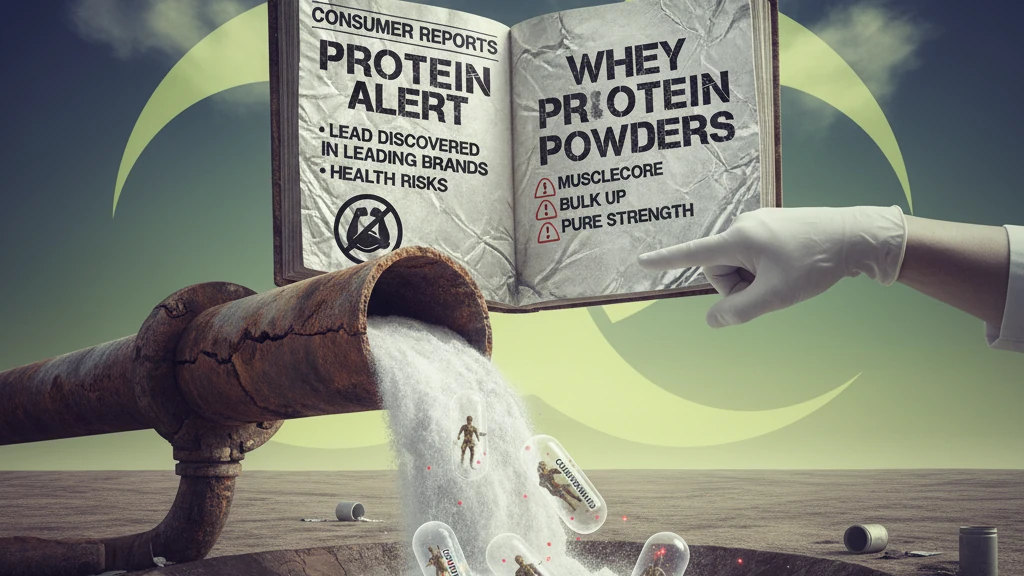
You pour in a scoop, mix it with water or milk, and count it as one more step toward muscle, recovery or meeting your daily protein goal. But what if that simple act exposed you to a silent risk: heavy metal contamination, especially lead?
Recent investigations reveal many popular protein powders, including whey‑based, beef‑based and plant‑based formulas, contain measurable amounts of lead. For parents, athletes, dietitians and wellness‑seekers alike, the question isn’t just “how much protein,” but “how pure is it?” Enter the regulatory backdrop of the Food and Drug Administration (FDA), state‑level rules like California’s Proposition 65 and the growing voice of independent testing.
A Real‑World Snapshot
Imagine a 28‑year‑old fitness enthusiast, mixing a post‑workout shake every evening. She believes she’s doing “everything right”: hitting 30–40 g of protein, choosing a brand that boasts “clean” or “plant‑based,” reading label claims, following Instagram influencers. Then one day she reads that a consumer‑advocacy organization found lead in over two‑thirds of protein powders tested, some at levels more than ten times what they deemed “safe” per serving. Would she re‑evaluate her routine? The recent Consumer Reports investigation found that in 23 protein‑powder products tested, around 70 % contained lead per serving that exceeded their internal threshold of 0.5 micrograms (µg) per day. (Consumer Reports) This isn’t just a niche bodybuilding issue. It strikes at general health, differential risk (pregnant women, children) and the trust consumers place in “supplement” vs. “food” classifications.
Why This Matters
Lead: No Safe Dose
The FDA explicitly states that “there is no known safe level of exposure to lead” (for all populations). (U.S. Food and Drug Administration) Lead has well‑documented effects on cognitive development, cardiovascular health, kidney function and reproductive systems. Thus even “low” exposures, when repeated, are cause for concern.
Regulatory & Classification Gaps
Many protein powders are marketed as dietary supplements rather than foods. The regulatory regime for supplements differs: the manufacturer bears the burden of safety, rather than pre‑market approval by the FDA. The watchdoging is weaker. As noted by Harvard Health Publishing: “As with all supplements, the FDA doesn’t verify that protein supplements contain what they are claimed to, while foods are subject to more regulation.” (Consumer Reports) Further, some investigators use state‑level benchmarks (e.g., California Proposition 65) rather than federally enforced thresholds. For example, Consumer Reports uses 0.5 µg/day as its internal “level of concern,” whereas the FDA may allow higher amounts based on broader tolerances in certain foods. (Verywell Health) This regulatory gap means consumers may assume “safe” when actual oversight is limited.
Contamination Pathways
Where is the lead coming from? For whey (dairy‑based proteins), contamination might come from feed, water or processing equipment. But for plant‑based proteins (pea, hemp, rice, soy), the risk appears substantially higher: plants absorb heavy metals from soil, water and fertilizer. One article noted that plant‑based powders had nine times more lead than dairy protein powders, on average. (Consumer Reports) Also, flavoring (e.g., chocolate versions) may add additional risk. In one analysis, chocolate‑flavored powders had four times the lead of vanilla versions. (Real Simple) The result: contamination isn’t just theoretical—it’s measurable.
Key Findings in Protein Powders
Here are some of the headline data points:
- In the Consumer Reports testing of 23 products, they found plant‑based powders had lead levels per serving that ranged up to 7.7 µg (for one product) — which is ~1,570 % of their 0.5 µg/day threshold. (Consumer Reports)
- For dairy/whey‑based powders, while lead levels were lower, half of the products still had contamination above CR’s “level of concern.” (Consumer Reports)
- According to the Clean Label Project (160 products from 70 brands): 47 % exceeded at least one California Prop 65 threshold for heavy metals (lead, arsenic, cadmium, mercury). (Clean Label Project)
- In that same study: plant‑based protein powders had ~3× more lead than whey‑based alternatives. (Clean Label Project)
- A separate analysis noted that whey, collagen, and pea‑based powders were less likely to exceed California’s Prop 65 lead thresholds: 28 % of whey powders vs. 75 % of all powders (from earlier dataset) had “high” lead levels. (Real Simple)
Why Whey Often Looks Safer (But Not Risk‑Free)
For individuals wondering specifically about whey protein powders (derived from dairy), the data suggest a relative advantage but not zero risk.
Advantages
- Lower absorption of heavy metals via the protein chain compared with direct plant uptake from soil. (Plants draw from contaminated soils more directly.)
- Some testing suggests whey‑based powders are less likely to exceed heavy‑metal thresholds compared to plant‑based or beef‑based powders. (Real Simple)
- With fewer contamination points, whey may afford fewer “risk layers” from raw materials—though that doesn’t eliminate contamination entirely.
But important caveats
- “Less likely” is not “never.” Some whey‑based products in the Consumer Reports set still had elevated lead or other heavy‑metal levels (e.g., inorganic arsenic in one “serious mass” whey product). (Consumer Reports Advocacy)
- Serving size matters. A “mass gainer” powder might use larger serving sizes (e.g., 300+ g) and therefore concentrate more contaminants per serving.
- The regulatory label might say “whey isolate” or “whey concentrate” but that doesn’t guarantee heavy‑metal testing.
- Individuals with greater vulnerability (pregnant/lactating women, children, those with kidney disease) may need to evaluate even low‑level exposures more cautiously.
What Doesn’t Change: Protein Needs & Whole Food Perspective
Even before contamination enters the discussion, there’s a valid question: do most people need protein powders? According to Consumer Reports:
- Adults generally need about 0.36 g per pound of bodyweight (≈0.8 g / kg) when healthy and not under intense strength training. (Consumer Reports)
- Many people can meet those needs through whole foods (e.g., yogurt, chicken breast, beans) rather than relying on processed powders.
- Protein powders often deliver 20–30 g or more per serving—sometimes far more than needed in one eating occasion. Excessive protein (especially in those with kidney issues) may carry risk. (Consumer Reports)
In short: if you can hit your protein targets through food, you might avoid both the unnecessary cost and the contamination risk of powders.
The Ethical & Industry Context
Behind the numbers lies an ethical story: transparency, consumer trust, and regulatory inertia.
Industry Norms & Testing
Because many powders are sold as dietary supplements rather than foods, the burden of pre‑market testing often rests with the manufacturer—not with the FDA. There’s wide variation in third‑party certification. CR’s investigation points to testers urging the FDA to set strict limits for lead in protein supplements. (Consumer Reports Advocacy) Some industry groups criticized the reports, calling them misleading or alarmist—because the thresholds (e.g., Prop 65) are stricter than federal limits and don’t necessarily reflect risk in real‑world usage. (SupplySide Supplement Journal) Still, the lack of consistent heavy‑metal testing across brands creates a “buyer beware” environment.
IngredientIQ’s Role
In this context, IngredientIQ positions itself as a platform bringing transparency: tracking product‑specific testing, surfacing third‑party lab data, translating regulatory thresholds and helping consumers distinguish between brands and serving patterns. The ethical contrast is clear: many brands emphasize taste, muscle gain or convenience, but fewer emphasize safety, sourcing of raw ingredients, independent heavy‑metal screening, or user‑relevant risk information (e.g., how often a product can be safely consumed). It is not enough to simply sell protein, it matters where it comes from, how it is tested, and whether consumers are told when not to use it (e.g., daily vs. occasional).
Practical Recommendations
For those using or considering protein powders, especially whey, plant‑based, or mass‑gainer formulas, here are actionable guidelines:
- Check for third‑party certification. Look for labels such as National Science Foundation (NSF) International Certified for Sport, Informed‑Choice, or mention of heavy‑metal testing in the brand’s documentation.
- Review serving size and frequency. If a serving is very large (e.g., 300 g) or you consume multiple servings daily, cumulative contamination risk may increase.
- Prefer whey/dairy‑based products if contamination is a major concern, especially if you’re not committed to a plant‑based diet—but still evaluate brand by brand.
- Avoid relying on powders as the sole protein source. Establish a whole‑food base (lean meats, dairy, legumes, eggs). Powders are supplemental—not substitute.
- Limit use of powders with higher risk of contamination: plant‑based powders, chocolate‑flavored versions, “mass gainer” high‑volume servings.
- For vulnerable groups (pregnant/lactating persons, children, those with kidney disease): err on side of caution. Even “occasional” high‑lead servings may matter over time.
- Follow updates and transparent test reports. Brands occasionally respond to heavy‑metal findings with reformulation or additional testing. IngredientIQ aims to surface those changes.
What’s Next & Wider Implications
- Regulatory action: The CR investigation has called on the FDA to set stricter limits for heavy metals in dietary supplements, and to require clearer labeling. (Consumer Reports Advocacy)
- Soil and agronomy implications: The higher contamination in plant‑based powders points to broader issues in agricultural sourcing, soil remediation and supply‑chain transparency. (Northeastern Global News)
- Consumer education: The notion of “plant‑based = always safer” is being challenged; contamination risk may actually be higher in plant sources due to absorption from the environment.
- Transparency demand: Brands that can show batch‑specific heavy‑metal test results will increasingly differentiate themselves in the marketplace.
- Long‑term exposure risk: Even if a single serving seems “low risk,” regular daily use over years may matter, especially if combined with other dietary exposures to lead (water, soil, other foods).
- IngredientIQ’s niche: By combining regulatory science (FDA, Prop 65, peer‑review studies) with consumer‑facing clarity (brand data, risk tiers), IngredientIQ stands to fill a gap between marketing‑driven supplement claims and deep regulatory vigilance.
Key Takeaway
Using a protein powder isn’t inherently unsafe, but the recent data make clear this isn’t a back‑of‑the‑box decision either. Lead contamination is real, especially in plant‑based and large‑serving formulas; the regulatory landscape is patchy; and consumers need to approach supplements with as much scrutiny as they do foods. For those serious about health, recovery, longevity, or simply not trading unseen risk for perceived gain—ingredient transparency must become non‑negotiable. That is precisely where IngredientIQ enters the equation.
References
- “Protein Powders and Shakes Contain High Levels of Lead” – Consumer Reports. (Consumer Reports)
- “Lead in Food and Foodwares” – FDA. (U.S. Food and Drug Administration)
- “Truth About Protein Drinks and Heavy Metals” – Harvard Health. (Harvard Health)
- Clean Label Project – Protein Category Insights Report. (Clean Label Project)
- “Why Lead Is Showing Up in Protein Powders and Cinnamon” – Northeastern University commentary. (Northeastern Global News)
- “The Truth About Protein Drinks” – Consumer Reports nutrition explainer. (Consumer Reports)
Hashtags
#proteinpowder #foodcontaminants #heavymetals #leadexposure #supplementsafety #wheypower #plantbasedprotein #ingredienttransparency #ingredientIQ #nutritioninsights #regulatoryscience #healthrisk