
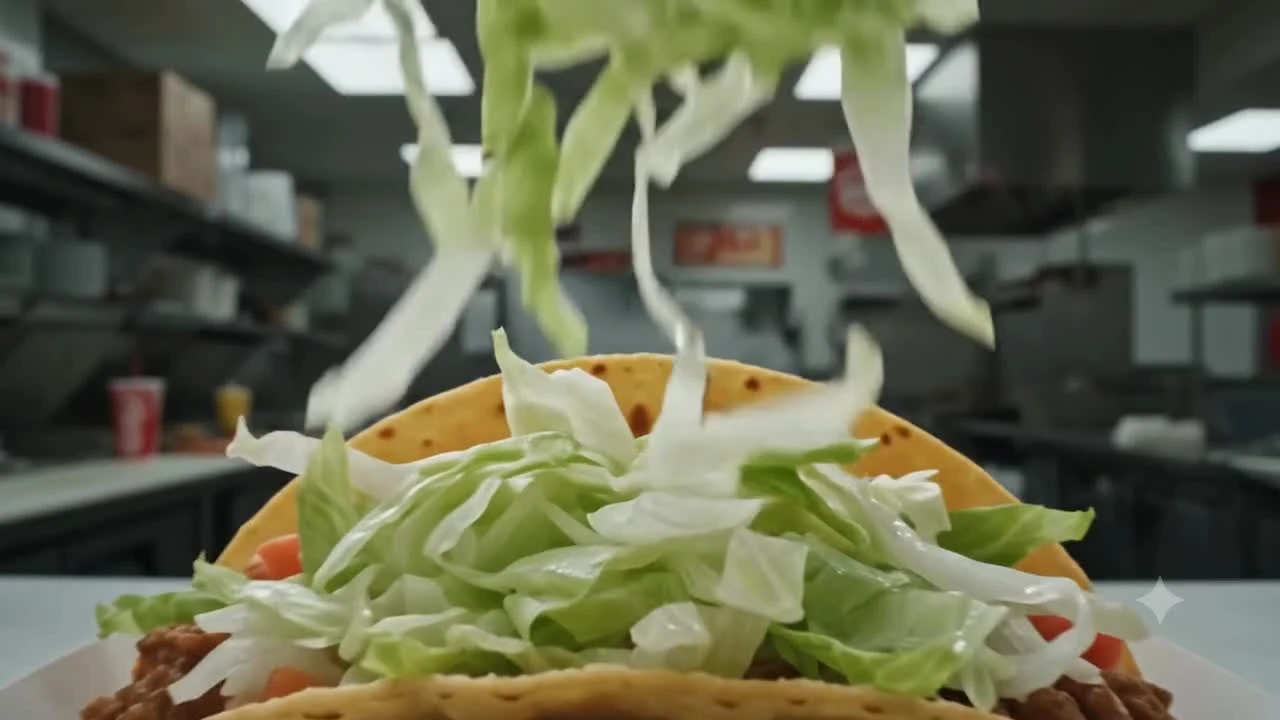
On July 16, federal health officials told consumers in five states not to eat shredded iceberg lettuce served at Taco Bell . More than 1,644 people who became ill had reported eating at the chain, 94 were hospitalized, and laboratory and traceback evidence pointed investigators toward iceberg lettuce imported from Mexico and distributed by a single supplier. The supplier’s name was not disclosed in the initial public notices.
That omission quickly became part of the story.
News organizations, citing people familiar with the investigation, identified the lettuce supplier as Taylor Farms , the Salinas, California-based produce company whose products reach supermarkets, restaurants and institutional kitchens across North America. Taylor Farms had not publicly confirmed the connection as of July 17, and the Centers for Disease Control and Prevention and FDA continued to describe the implicated company only as a single supplier.
For consumers searching “Taylor Farms cyclospora,” “Taco Bell lettuce" or “lettuce parasite outbreak,” the distinction matters. Authorities have confirmed the food vehicle: shredded iceberg lettuce served at Taco Bell locations in Indiana, Kentucky, Michigan, Ohio and West Virginia. They have not, in their public outbreak notices, officially named Taylor Farms.
That gap between what regulators know, what reporters learn and what shoppers can verify is more than a communications problem. It exposes how little usable supply-chain information reaches people before a bag of salad, restaurant taco or bowl of chopped lettuce becomes evidence in an outbreak investigation.
A meal, followed by a long illness
Cyclospora does not usually announce itself immediately.
A person may eat contaminated lettuce and feel fine for roughly a week. Then the symptoms begin: frequent watery diarrhea, loss of appetite, stomach cramps, bloating, nausea, fatigue, and weight loss. Untreated illness can persist for weeks or return after appearing to improve. The standard treatment is a combination antibiotic containing trimethoprim and sulfamethoxazole.
Imagine a parent in suburban Detroit who stopped at Taco Bell after a child's evening practice. Nothing about the meal seemed unusual. Eight days later, the parent is missing work, struggling to stay hydrated and trying to reconstruct every raw vegetable eaten during the previous two weeks.
Was it restaurant lettuce? Cilantro from the grocery store? A salad kit? Something eaten at a cookout?
That uncertainty is built into Cyclospora investigations. Patients are often interviewed four to six weeks after the exposure, when investigators must ask them to remember ordinary ingredients from ordinary meals. Cases can be scattered across cities and states. Produce may have been harvested, shredded, mixed, shipped, and eaten before the first patient realizes something is wrong.
By the time the pattern becomes visible, the lettuce itself may be gone.
What officials have established
The current federal investigation concerns shredded iceberg lettuce served at Taco Bell restaurants in five states. FDA traceback work linked those restaurants to a single supplier and to lettuce originating in Mexico. Taco Bell agreed to stop using lettuce from that supplier, while the FDA began determining whether related product remained in circulation and increased border screening for products implicated in the outbreak.
The CDC’s July 16 advisory was unusually direct: consumers should not eat shredded iceberg lettuce from Taco Bell locations in the affected states.
Yet several questions remain open.
Did contamination occur in a field, through irrigation water, during harvesting or inside a processing plant? Did the implicated supplier distribute lettuce from the same source to other restaurants or retailers? Were sanitation records, water tests, and lot codes sufficiently detailed to isolate the problem quickly? Could additional illnesses be genetically or epidemiologically linked to the same production chain?
The answers will determine whether this remains a restaurant-specific warning or becomes a broader produce investigation.
The FDA has said it is collecting samples and working with the supplier. Those laboratory results may clarify the source, but detecting Cyclospora in food is difficult. A negative sample does not prove that an entire field or shipment was uncontaminated. The parasite may be distributed unevenly, and the contaminated lot may already have been consumed or discarded.
Why rinsing may not solve the problem
Cyclospora cayetanensis is a microscopic parasite transmitted when people consume food or water contaminated with fecal material. Unlike pathogens that can spread readily from one person to another, freshly shed Cyclospora generally needs time in the environment to become infectious. That points investigators toward contaminated water, soil, sanitation failures or environmental transfer rather than a sick diner infecting another diner over lunch.
Routine produce washing offers limited reassurance. The FDA warns that Cyclospora may not be eliminated by normal chemical disinfection or sanitizing methods, including chlorination. Washing lettuce under running water may remove dirt and reduce some surface contamination, but it cannot make contaminated produce reliably safe.
Shredded lettuce presents additional complications. Cutting creates more exposed surface area. Large processing runs can combine produce from different fields. Wash water, belts, blades, bins, and packing equipment can turn a localized contamination event into a distributed one if controls fail.
The convenience consumers pay for also makes the final product harder to trace by sight. A restaurant customer sees pale-green lettuce. The supply chain sees ranches, harvest crews, processing dates, production lines, shipping pallets, distributors and franchise locations.
The consumer usually sees none of that.
Taylor Farms and an earlier Cyclospora investigation
Taylor Farms is headquartered in Salinas, California, often called the nation’s salad bowl. The company operates through multiple regional businesses and supplies fresh-cut vegetables, packaged salads and foodservice products. Its own public materials list operations or employment contacts in California, Illinois, New Jersey, Washington and Arizona, among other locations.
The company’s name carries particular significance in a Cyclospora investigation because of what happened in 2013.
That year, federal and state investigators linked a cluster of cyclosporiasis illnesses in Iowa and Nebraska to a salad mix produced by Taylor Farms de Mexico. FDA investigators examined a processing facility in Doctor Mora, Guanajuato, and several ranches supplying leafy greens and other ingredients. Taylor Farms de Mexico voluntarily suspended shipments of salad mixes and leafy green products to the United States while the assessment was underway.
Investigators identified fields and facilities of interest, but the environmental assessment did not yield a simple, definitive answer, such as a single broken pipe containing the outbreak strain. That is common in produce outbreaks. The evidence may reveal pathways and weaknesses without preserving the precise details of the contamination event.
The company subsequently implemented a Cyclospora sampling program before resuming operations. The episode demonstrated both the value and the limitations of after-the-fact inspection: investigators can reconstruct the system, but the biological evidence may disappear before they arrive.
The 2026 investigation does not prove that the same facility, farms or conditions are involved. Nor does a past outbreak establish responsibility for a current one. It does, however, make disclosure and independent verification especially important. When a supplier has previously operated within a documented Cyclospora traceback, regulators and the public need enough information to determine what changed, what controls were added and whether those controls worked.
The fast-food connection is not new
Taco Bell has faced a serious lettuce-related outbreak before, though the pathogen was different.
In 2006, an outbreak of E. coli O157 sickened customers in the northeastern United States. The CDC concluded that shredded lettuce eaten at Taco Bell was the most likely source and that contamination probably occurred before the lettuce reached individual restaurants.
Chipotle Mexican Grill became another symbol of fresh-food vulnerability after a succession of E. coli, norovirus and other outbreaks during the last decade. Its experience showed how quickly confidence can collapse when a brand’s promise of fresh preparation collides with a supply system that consumers cannot inspect.
The recurring lesson is not that lettuce is uniquely reckless or that consumers should abandon vegetables. Fresh produce remains nutritionally valuable. The harder lesson is that serving ingredients raw eliminates the final protective step that cooking provides.
When contamination occurs upstream, neither the cashier nor the customer can see, smell or taste it.
Why Cyclospora is becoming a larger American problem
Cyclospora was once discussed mainly as a travel-associated infection. That framing is now outdated.
Recent scientific reviews note that domestically sourced produce has been implicated in U.S. outbreaks since 2018. Cases are strongly seasonal, usually rising between May and August, but the foods involved have varied: leafy greens, herbs, berries and mixed salads have all appeared in past investigations.
Improved testing partly explains the increased visibility. FDA scientists developed molecular methods capable of detecting Cyclospora in produce, including a test used to confirm the parasite in salad mix sold through McDonald's s during a 2018 outbreak. More recent automated assays can detect very small numbers of oocysts while reducing laboratory handling time.
Better detection, however, does not necessarily mean better prevention.
The FDA created a Cyclospora Prevention, Response and Research Action Plan to improve surveillance, outbreak response and knowledge of contamination pathways. The agency still faces basic scientific difficulties: the parasite cannot be routinely cultured as with many bacteria, viability testing remains challenging, and environmental sources may be difficult to conclusively link to human cases.
At the same time, oversight of imported food has come under pressure. A 2025 ProPublica investigation found that FDA inspections of foreign food facilities had fallen to a historic low, despite Congress giving the agency stronger authority to hold overseas producers to U.S. safety requirements. That finding does not establish the cause of the current outbreak. It does reveal a regulatory environment in which the volume and complexity of imports can exceed the government's inspection capacity.
Consumer Reports has separately identified leafy greens among foods that repeatedly produce significant outbreaks, emphasizing that centralized processing and wide distribution can magnify a single contamination event.
The emerging pattern is uncomfortable: detection technology is improving while the physical system it monitors remains sprawling, fragmented and only partly visible.
Iceberg lettuce is not automatically dangerous
The phrase “iceberg lettuce Cyclospora” can easily mutate into a generalized warning against all lettuce. The evidence does not support that conclusion.
The federal advisory is tied to shredded iceberg lettuce served at specific Taco Bell locations in five states, not every head of iceberg lettuce or every Taylor Farms salad on the market. As of the July 16 notice, no nationwide consumer recall covering all iceberg lettuce had been announced. The CDC reported no deaths in the five-state cluster.
Consumers in the affected states should follow the specific CDC warning. Anyone experiencing prolonged watery diarrhea, especially after eating at an implicated restaurant, should contact a healthcare professional and mention possible Cyclospora exposure. Testing is not always included in routine stool panels, so the suspected organism may need to be requested.
People should not assume that a “triple-washed” or “ready-to-eat” label guarantees the absence of parasites. Nor should they attempt to disinfect lettuce with soap, bleach or household chemicals.
For people at higher risk of dehydration or complications, temporarily choosing cooked vegetables may reduce exposure while the investigation continues.
The information failure behind the outbreak
A modern food package may disclose calories, sodium, allergens and a marketing story about the farm. It rarely gives a consumer usable, real-time answers to the questions that matter during an outbreak:
Which facility processed this ingredient?
Which growing region supplied it?
Was it distributed to restaurants under another company’s name?
Is the lot connected to an active FDA or CDC investigation?
Has the same processor appeared in earlier outbreaks?
A restaurant menu provides even less.
This is where ingredient transparency must move beyond static labels. A useful food-intelligence system would connect an ingredient to supplier relationships, processing locations, active outbreak notices, recalls, geographic warnings and known health considerations. It would distinguish a confirmed regulatory finding from an unnamed-source report. It would update as the evidence changes.
That distinction is central to IngredientIQ's approach. The credible role for an AI-driven ingredient platform is not to declare food safe or unsafe from a keyword. It is to organize fragmented evidence, expose uncertainty, and show why a recommendation applies to one product, one location, or one consumer rather than another.
For a parent in Ohio, the relevant alert may concern shredded lettuce served at a restaurant yesterday. For a clinician, it may be the incubation period and the need for parasite-specific testing. For an investigative reporter, it may be the supplier network linking an imported crop to dozens of restaurant locations.
Personalization without provenance is guesswork. Provenance without current regulatory data is paperwork. The two have to meet.
What accountability would look like
The first requirement is faster supplier disclosure once the evidence reaches an appropriate threshold. Naming a company prematurely can cause serious harm, but withholding a name after traceback evidence is strong can leave consumers and downstream businesses unable to assess their exposure.
Second, restaurant and retail buyers should be able to quickly trace a fresh-cut product back through the processor and grower, without having to assemble records from incompatible systems. Research into digital food-supply tracking suggests that interoperable systems can improve visibility, though technical adoption and data quality remain obstacles.
Third, regulators need sufficient inspection, sampling, and laboratory capacity to test prevention systems before an outbreak, not merely to reconstruct them afterward.
Finally, companies should publish what they learned. A recall page that says little beyond “commitment to food safety” does not allow the public to evaluate whether irrigation, sanitation, employee hygiene, testing or supplier controls actually changed.
The current Taylor Farms reporting should therefore be handled with precision. Journalists have identified the company through sources familiar with the investigation. Federal agencies have confirmed one supplier but have not publicly named it. Those are related facts, not interchangeable ones.
In an outbreak, accuracy is itself a public-health intervention.
The question consumers should keep asking
The immediate question is whether shredded iceberg lettuce from the implicated supply chain remains in circulation.
The larger question is harder: why does it take hundreds or thousands of illnesses before ordinary people can see where a supposedly simple ingredient came from?
Lettuce moves through an industrial network disguised as a commodity. It arrives clean, cold and anonymous. Only after the outbreak does its history reappear.
IngredientIQ’s public-interest test is whether it can make that history visible earlier, with evidence strong enough for consumers, clinicians and journalists to act without panic. That means resisting the seductive but inaccurate answer, showing the data's limits, and updating conclusions when regulators do.
For consumers: check current CDC and FDA notices before discarding unrelated food, retain packaging and receipts when illness is suspected, and seek medical care for persistent watery diarrhea.
For health professionals: ask specifically about raw produce and restaurant exposures during the previous two weeks, consider Cyclospora testing, and report confirmed cases promptly to public-health authorities.
For journalists: press regulators, restaurant chains and suppliers for lot-level distribution information, inspection records, sampling results and the evidentiary basis for naming or withholding a supplier.
Follow IngredientIQ's social channels for early access to new Decoded investigations, regulatory updates and continuing coverage of the Taco Bell lettuce traceback.
#TaylorFarms #TacoBellLettuce #Cyclospora #CyclosporaOutbreak #LettuceOutbreak #IcebergLettuce #FoodSafety #IngredientTransparency #ProduceSafety #FoodTraceability #PublicHealth #DecodedByIngredientIQ