
How a Rare Insect, and Its Even Rarer Parasite; could Challenge Public Health Norms
In the Shadows of the Foothills, a Public Health Blind Spot
In the foothills of Los Angeles County, a homeowner spotted a strange, beetle-like insect on their bedroom wall. Thinking little of it, they crushed it, cleaned up, and went to bed. Weeks later, a persistent eye swelling led them to a doctor, who, after multiple referrals and a serology test, diagnosed a condition so obscure most clinicians never consider it: Chagas disease.
This is not a scene from rural Central America. It happened in California. And it’s happening right now!
The Insect You’ve Never Heard Of, in a Place You Wouldn’t Expect
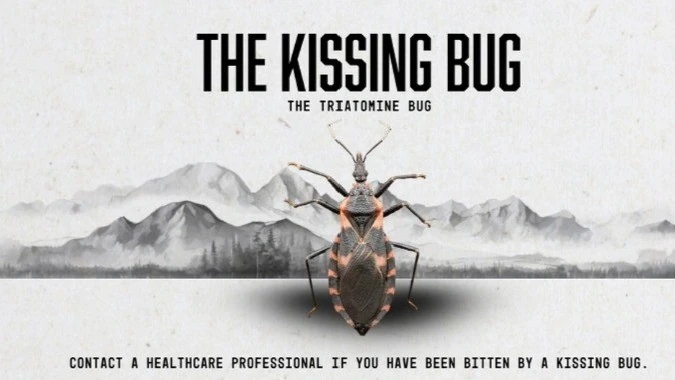
Colloquially known as the "kissing bug," members of the Triatominae subfamily have long been dismissed as tropical insects confined to Latin America. But recent fieldwork and peer-reviewed studies confirm that Triatoma protracta, a species native to the western United States, is established across California, particularly in mountain and canyon regions where woodrats (Neotoma)—the bug’s preferred host—thrive.
While the bug itself is unsettling, the true threat lies in what it carries: Trypanosoma cruzi, the protozoan parasite responsible for Chagas disease, a neglected tropical disease now being tracked by the Centers for Disease Control and Prevention and World Health Organization as it creeps northward.
A Disease Misdiagnosed, and Dangerously Overlooked
Chagas is not spread by the bite, but by contact with the bug’s feces, typically introduced into the bite wound through scratching or mucosal exposure. In Latin America, transmission is well-documented and often occurs during childhood. In the U.S., the disease has flown under the radar for decades, dismissed as an imported condition.
But new evidence suggests otherwise.
A 2023 study published in Emerging Infectious Diseases confirmed at least 76 cases of locally acquired Chagas disease in eight U.S. states, including California (CDC). Some were identified only after cardiac complications led to advanced testing. “We’re likely missing hundreds, if not thousands, of cases,” warned epidemiologist Dr. Susan Montgomery.
Data the Public Doesn’t See
In Southern California, 28% of kissing bugs tested carry T. cruzi. In Northern California, that number exceeds 55%, according to field studies cited by ChagasUS.org. One-third of bugs collected in Griffith Park, Los Angeles, were infected (LA Times).
Yet, most physicians receive no formal training on Chagas, and there is no CDC-mandated screening for blood donors in California—even though the parasite can be transmitted via transfusion, organ donation, or congenital pathways.
Why the Risk Is Rising Now
Several converging trends are compounding the problem:
- Climate shifts are expanding the kissing bug’s habitat into areas previously considered too cold or dry.
- Human encroachment into wildlands is increasing contact between humans and infected wildlife.
- Diagnostic failures mean most U.S. cases are only caught in the chronic stage—when the disease becomes irreversible, often resulting in cardiomyopathy, arrhythmias, and even sudden death.
And yet, public awareness remains virtually nonexistent.
IngredientIQ’s Role in the Silent Spread
At IngredientIQ, we believe public health protection requires anticipatory surveillance, AI-driven risk prediction, and ethical labeling standards, whether the concern is a neurotoxic additive or a vector-borne parasite. The same blind spots that have let T. cruzi slip past clinical and consumer detection are present across ingredient disclosure systems today.
So What Should Change?
- Surveillance Expansion: California needs standardized bug trapping, testing, and GIS mapping—particularly in foothill and canyon communities.
- Diagnostic Integration: Chagas disease must be added to differential diagnoses for cardiomyopathies, especially among patients with no travel history.
- Public Reporting Tools: Much like food recalls, bug sightings and human infections should be aggregated in public dashboards.
- Cross-System Accountability: Regulatory action—whether from the FDA, CDPH, or local health boards—must shift from reactive to proactive.
Call to Action
If you’re a parent, ask your pediatrician whether they’ve been trained to recognize Chagas. If you’re a health professional, consider Chagas testing in cases of unexplained cardiac symptoms. If you’re a journalist, the map of silent outbreaks is your next story. If you care about transparency in any system that touches public health, follow IngredientIQ.
We’re mapping hidden risks, one dataset at a time.
#ChagasDisease #KissingBug #CaliforniaHealth #VectorSurveillance #IngredientTransparency #AIinHealthcare #HiddenThreats #TropicalDiseases #PublicHealthEthics #ConsumerRightToKnow #CardiacRisk #EnvironmentalHealth #Kissing #Bug