
Decoded, an investigative newsletter by IngredientIQ
At first, the questions sounded simple: Is it safe to go outside? Should my child wear an N95? When will the smoke clear?
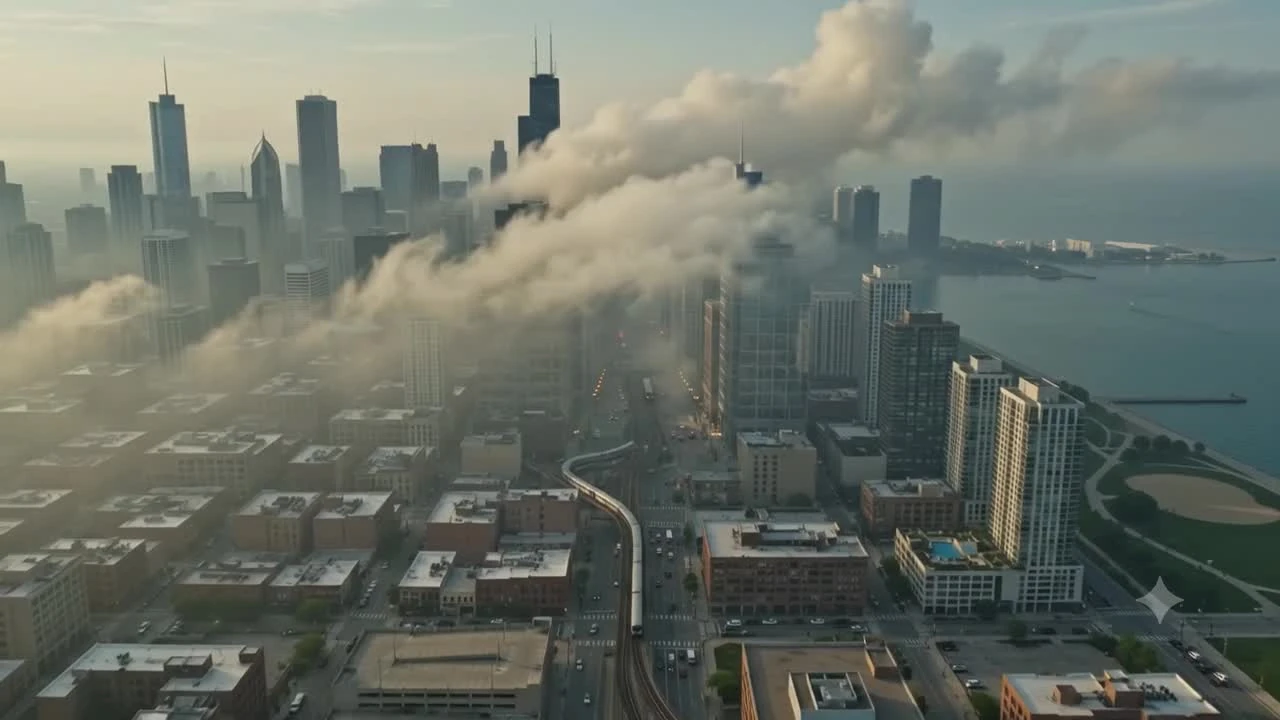
By Thursday evening, July 16, Chicago residents were asking those questions under a yellow-gray sky as smoke from Canadian and Minnesota wildfires pushed the city’s air into dangerous territory. Chicago briefly registered among the worst major-city air-quality readings in the world. Schools moved activities indoors. A Chicago Fire soccer match at Soldier Field was postponed. Across the Midwest and Northeast, millions of people were left studying colored maps, conflicting forecasts and sensor readings that could change from one neighborhood to the next.
The most urgent question now is when conditions will improve.
The honest answer is uncomfortable: Chicago may get periods of relief, but a clean, lasting break is not yet assured. The forecast for Friday, July 17 calls for poor air quality due to smoke in the morning. Saturday, July 18, may bring very unhealthy conditions, while smoke could continue to produce unhealthy air and reduced visibility on Sunday, July 19. Thunderstorms and shifting winds may temporarily dilute smoke, but they can also move plumes unevenly rather than end the episode.
This is no longer an unusual western wildfire story drifting east. It is an exposure crisis in which location, health status, building ventilation, work requirements and access to reliable protection determine who bears the greatest risk.
Where Chicago’s smoke is coming from
More than 100 active fires were burning in northern Ontario by midweek, with additional fires affecting Minnesota's Boundary Waters region. Smoke was transported south and east across the Great Lakes under atmospheric conditions that kept pollution near the surface. The broader Canadian total exceeded 800 active fires, though that national figure should not be mistaken for 800 separate plumes directly affecting Chicago. The city’s air is shaped by a smaller set of upwind fires, wind direction, plume altitude and local ozone formation.
Natural Resources Canada's Wildland Fire Information System tracks current fire locations and conditions. AirNow’s Fire and Smoke Map combines regulatory monitors, temporary monitors, lower-cost sensors and satellite-observed smoke. Each layer answers a different question. A satellite plume shows smoke aloft, for example, but does not prove that the same concentration has reached breathing level. AirNow explicitly warns that satellite-detected smoke can be obscured by clouds or darkness and may not reflect ground-level pollution.
That distinction matters when a parent sees smoke on one map, a moderate reading on another and a hazardous number circulating on social media.
What an AQI number actually tells you
The Air Quality Index translates pollutant measurements into a health-warning scale:
AQICategoryPractical meaning0–50GoodLittle expected risk51–100ModerateSome unusually sensitive people may notice effects101–150Unhealthy for sensitive groupsChildren, older adults, pregnant people and people with heart or lung disease should reduce exposure151–200UnhealthyEveryone may experience effects201–300Very unhealthyHealth alert; substantial exposure reduction is warranted301+HazardousEmergency conditions; everyone should avoid exposure
The AQI is based on several regulated pollutants, but wildfire events are usually driven by PM2.5, particles no wider than 2.5 micrometers. These particles can penetrate deep into the lungs. Some can enter the bloodstream. EPA identifies PM2.5 as the largest health threat in wildfire smoke and notes that even a single day of smoky-air exposure can affect health.
Numbers above 500 require special caution. The standard AQI scale formally tops out at 500, so readings reported as 600, 700 or 1,000 may be extrapolations, sensor outputs or pollutant concentrations converted by a private platform. They communicate extreme pollution, but they are not always directly comparable across apps.
The phrase “worst air quality in the world” also deserves scrutiny. Global city rankings are snapshots drawn from the monitoring stations available to a particular platform. They are useful warnings, not a scientifically complete league table of every city on Earth. Chicago’s placement can change by the hour as winds shift and other cities report new data.
The actionable question is not whether Chicago ranks first, third or tenth. It is whether the air outside your home, school or workplace has crossed a threshold that changes what you should do.
Is it safe to go outside?
There is no universal yes-or-no answer because dose matters. Exposure increases with particle concentration, time outside, and breathing rate.
A short walk to a car is different from a two-hour run. A healthy adult sitting outdoors is not in the same position as a child at soccer practice, a pregnant worker on an eight-hour shift or someone with asthma carrying groceries up several flights of stairs.
When the AQI is unhealthy or worse, reducing outdoor exertion is one of the fastest ways to lower inhaled dose. At very unhealthy or hazardous levels, outdoor exercise, sports practices and prolonged work should be postponed, moved indoors or redesigned. People with asthma or chronic obstructive pulmonary disease should keep prescribed rescue medication accessible and follow their clinician’s action plan. Chest pain, severe shortness of breath, confusion or blue lips require urgent medical attention.
The scientific basis extends well beyond temporary throat irritation. EPA’s review links short-term PM2.5 exposure with respiratory and cardiovascular illness. A 2025 multicountry analysis covering more than 1.7 million respiratory hospitalizations found that wildfire-specific PM2.5 was associated with increased hospitalization risks and appeared more harmful for several respiratory outcomes than PM2.5 from non-wildfire sources. Children, older adults, and lower-income communities carried disproportionate burdens.
A separate Nature study examining the 2023 Canadian fires found that their smoke increased PM2.5 exposure well beyond Canada and the United States. The event was continental in public perception, but global in atmospheric reach.
An N95 helps, but only when it seals
A genuine NIOSH-approved N95 can remove more than 95 percent of wildfire-smoke particles in the PM2.5 size range under test conditions. EPA advises choosing a respirator marked “NIOSH” and “N95” or “P100,” ideally with two head straps, and fitting it tightly over the nose, cheeks and under the chin.
That protection falls sharply when air leaks around the edges.
Facial hair crossing the seal, loose ear loops, gaps around the nose and masks sized poorly for the wearer can defeat the filter. Surgical masks, cloth masks and bandanas may reduce exposure to larger ash particles, but they are not substitutes for a well-fitted particulate respirator.
N95 respirators also do not filter every gaseous component of smoke. Their principal value is controlling particle exposure.
Children present a practical problem. Standard occupational N95s are rarely certified specifically for pediatric fit, and a mask that is too large may offer little dependable protection. Families should prioritize indoor filtration, limit outdoor activity, and seek a child-sized respirator that forms a proper seal when outdoor exposure cannot be avoided.
Anyone who has difficulty breathing through a respirator, or who has significant heart or lung disease, should consult a healthcare professional rather than assuming that tighter is always safer.
Indoor air is not automatically clean air
Closing the windows can reduce smoke entry, but buildings leak. Exhaust fans, door openings, older window frames and some ventilation systems pull outdoor air inside. In homes without effective filtration, indoor PM2.5 can climb throughout a multiday smoke event.
US Environmental Protection Agency (EPA) recommends creating a cleaner-air room, operating a correctly sized portable air cleaner, and using an HVAC filter with the highest efficiency the system can safely accommodate. Recirculation settings can reduce the intake of outdoor smoke. Indoor particle sources should also be limited. Frying food, burning candles, smoking, vacuuming without effective filtration, and using a wood-burning fireplace can worsen the air indoors.
Yet “stay inside” is not an equal-opportunity intervention.
A resident in a newer home with central air, a HEPA purifier, and remote-work flexibility can substantially lower exposure. A delivery driver, construction worker, unhoused resident, or tenant in an overheated apartment may have to choose among smoke, heat, and lost income. The crisis reveals a familiar public-health fault line: warnings are distributed broadly, while the ability to follow them is privately purchased.
What recent investigations reveal
The current emergency follows several investigations that changed the scale of the wildfire-smoke story.
The Guardian 's July 2026 reporting documented more than 180 active fires in northern Ontario and air-quality alerts spanning over 20 U.S. states. Its account drew on government warnings, fire counts and monitoring data rather than treating an app’s city ranking as the sole measure of danger.
A 2024 Guardian investigation reported that long-term wildfire PM2.5 exposure was associated with more than 50,000 premature deaths in California between 2008 and 2018, carrying an estimated economic cost of hundreds of billions of dollars. The underlying peer-reviewed work shifted the frame from dramatic orange skies to cumulative mortality. Smoke was not merely an episodic nuisance. It was an unpriced health burden.
ProPublica Public Communication Wildfire reporting has exposed a different weak point: the thinning workforce expected to contain increasingly destructive fires. Federal wildland firefighters described low base pay, dangerous conditions and an exodus of experienced staff. Smoke protection cannot begin only when an AQI alert is issued for Chicago. It also depends on prevention, land management, emergency staffing and the capacity to control fires thousands of miles away.
Peer-reviewed evidence now reinforces that wider view. Research published in Nature found that wildfire smoke has stalled or reversed decades of U.S. progress in reducing PM2.5. A 2025 analysis projected that the mortality burden could rise substantially as climate change increases fire activity and smoke exposure.
No individual smoke event can be attributed to climate change with a slogan. Fire ignition, drought, heat, vegetation, lightning, human activity, and forest management interact. But studies that model fire behavior, atmospheric transport and health effects increasingly find that warming conditions are amplifying smoke-related harm. One global analysis estimated that climate change was already responsible for a measurable share of mortality associated with fire PM2.5.
When will Chicago's air get better?
Forecasting smoke is harder than forecasting temperature.
A plume can rise, descend, split, or recirculate. Surface wind may improve one neighborhood while worsening another. Rain can remove some particles, but relief may be brief if smoke continues arriving from upwind fires.
For Chicago, the current outlook suggests:
Friday, July 17:
Poor air quality may persist, especially during the morning. Afternoon storms could create temporary local improvement.
Saturday, July 18:
Conditions may remain very unhealthy despite breezier weather.
Sunday, July 19:
Smoke may still produce unhealthy air and impaired visibility.
This forecast should be treated as directional, not guaranteed. Check AirNow’s current monitor readings and the Fire and Smoke Map before outdoor activity rather than relying on a screenshot from several hours earlier.
The smoke will not necessarily remain equally bad throughout that period. Chicago may experience cleaner windows lasting several hours. But the available evidence does not support promising that the episode will be over tomorrow.
The transparency failure hiding in plain sight
Consumers are swimming in environmental data but often lack the context to act on it.
One app reports AQI 168. Another says 221. A backyard sensor flashes 307. A global ranking calls Chicago the world's most polluted city. Meanwhile, the official monitor may be miles away, and the person reading the number may be deciding whether to send an asthmatic child to camp.
Data without provenance can produce false precision. Data without personalization can produce generic advice that protects no one particularly well.
IngredientIQ was built around a related accountability problem: people routinely encounter technical exposure information, from chemical names to risk classifications, without enough context to understand what it means for their own health profile. The same discipline needed for ingredient transparency applies here. Identify the source. Distinguish measurement from interpretation. Explain uncertainty. Connect the evidence to the individual making the decision.
That does not make IngredientIQ a replacement for AirNow, a physician or a public-health agency. It points toward a more responsible information model, one that does not stop at displaying a score.
A useful system would tell a user where the air-quality reading came from, how recently it was updated, which pollutant is driving it, what uncertainty surrounds the value, and how the advice changes for asthma, pregnancy, age, occupation, or planned activity. The public does not need another alarming red number. It needs traceable evidence converted into a defensible choice.
What should readers do now?
Consumers should monitor AirNow rather than relying exclusively on social posts or a single private sensor. During unhealthy conditions, move strenuous activity indoors, run effective filtration, and wear a sealed, NIOSH-approved N95 when prolonged outdoor exposure cannot be avoided.
Health professionals should ask patients about occupational and housing exposure, not simply whether they “stayed indoors.” Guidance should account for heat, ventilation, access to medication, and whether a patient can realistically avoid outdoor work.
Journalists should report the pollutant, monitor source, timestamp and forecast uncertainty whenever publishing an AQI value. “Worst in the world” is a compelling headline, but it should never replace local health guidance or an explanation of how the ranking was produced.
Follow IngredientIQ's social platforms for early access to new investigations, source documents and continuing coverage of the systems that shape everyday exposure.
This edition also follows IngredientIQ's editorial safeguards for varied sentence structure, qualified claims, specific evidence and natural pacing.
#ChicagoAirQuality #WildfireSmoke #CanadianWildfires #AirQualityIndex #PM25 #N95Mask #PublicHealth #EnvironmentalHealth #AirPollution #SmokeForecast #HealthTransparency #IngredientIQ #airquality #n95 #chicago