
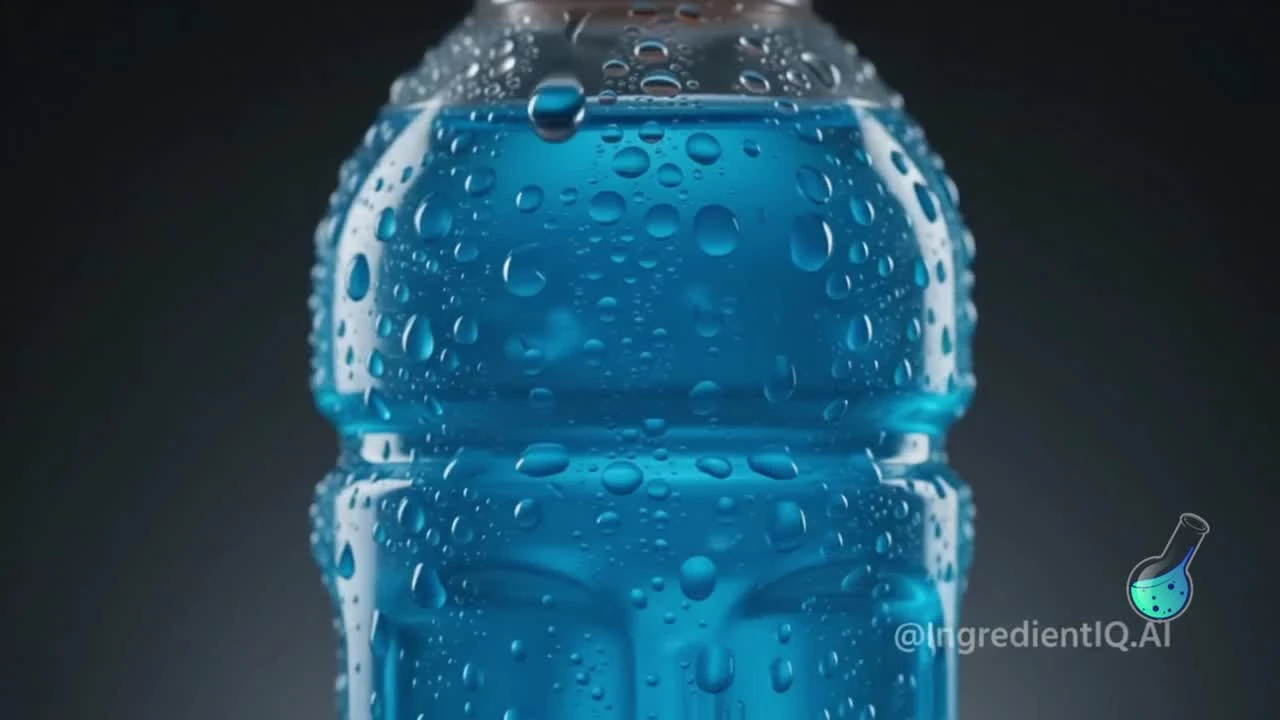
A brightly colored sports drink, a bowl of cereal, a fruit-flavored snack, a frosted cupcake. For decades, the synthetic dyes behind those colors were treated as a mostly cosmetic part of the American food system.
That assumption is being rewritten.
Seven familiar names sit at the center of the shift: Red 3, Red 40, Yellow 5, Yellow 6, Blue 1, Blue 2 and Green 3. They are often discussed as if they present one uniform health hazard. They don't. The evidence differs by dye, endpoint and dose. Red 3 now occupies a very different legal category from the other six.
But the larger question has become harder to dismiss: if color provides no nutritional benefit, how much uncertainty should regulators tolerate when children are among the heaviest consumers?
That question has moved from academic journals and advocacy reports into federal policy, state legislatures, school cafeterias and corporate reformulation plans.
And in 2026, the answer is still surprisingly unsettled.
A ban, a phase-out and a regulatory gap
On January 15, 2025, the U.S. FDA revoked authorization for FD&C Red No. 3 in food and ingested drugs. Food manufacturers have until January 15, 2027, to comply, while the drug deadline extends into 2028.
The reason matters.
FDA did not conclude that ordinary human exposure had been proved to cause cancer. Instead, high doses of Red 3 caused cancer in male laboratory rats through a hormonal mechanism that the agency says does not appear to operate the same way in humans. The federal Delaney Clause nonetheless prohibits approval of a color additive shown to induce cancer in humans or animals, triggering the revocation as a matter of law.
Red 40, Yellow 5, Yellow 6, Blue 1, Blue 2, and Green 3 are in a different position.
In April 2025, U.S. Department of Health and Human Services (HHS) and FDA announced an initiative to work with industry to remove petroleum-based synthetic colors from the U.S. food supply. FDA continues to describe the transition as an active agency priority and now publicly tracks company pledges. But unlike the Red 3 action, the push against these six colors is largely being carried out through industry cooperation rather than a blanket federal revocation of their authorizations.
That difference can vanish in headlines.
It shouldn't.
A legally enforceable withdrawal and a negotiated industry phase-out are not the same regulatory instrument.
California asked a different question
The modern fight over synthetic dyes did not begin with cancer.
It began with behavior.
In 2021, California's Office of Environmental Health Hazard Assessment (OEHHA) , completed an extensive assessment of synthetic food dyes and childhood neurobehavior. Its review examined human challenge studies, epidemiological evidence, and animal toxicology.
Its conclusion was more measured than the shorthand that followed: the scientific literature indicated that synthetic dyes can affect neurobehavior in some children, and existing federal acceptable-intake levels may not have been designed to protect against behavioral effects.
That is an important distinction.
The evidence does not show that every child who consumes Red 40 becomes hyperactive. It does not establish food dye exposure as a universal cause of ADHD. It does suggest that a susceptible subset of children may experience measurable changes in activity, attention, or behavior following exposure.
In the challenge studies reviewed by researchers associated with the California assessment, children were typically placed on dye-restricted diets and then exposed under controlled conditions. Across the body of evidence, enough studies detected behavioral effects to raise questions about whether conventional toxicology thresholds capture the outcome that parents and teachers might actually notice first: a change in how a child behaves.
A 2024 review indexed in PubMed again examined synthetic food colors in pediatric populations, including children with and without behavioral diagnoses, and argued that the accumulated literature warranted greater attention to possible neurological and behavioral effects.
The studies are not perfectly uniform. Outcomes vary. Sensitivity varies. Some of the evidence predates today's formulations and eating patterns.
But inconsistency is not the same as absence of evidence.
From scientific review to the school lunch line
California converted that concern into policy.
The California School Food Safety Act prohibits public schools from offering foods containing six synthetic dyes: Red 40, Yellow 5, Yellow 6, Blue 1, Blue 2, and Green 3. The statutory restrictions are scheduled to take effect at the end of 2027.
Consumer Reports highlighted the law as the first state measure specifically removing those six dyes from public-school foods, citing the California neurobehavior review as a scientific basis for action.
Then other states began moving.
West Virginia enacted an even broader approach, covering the seven dyes alongside other additives in school foods and later extending restrictions more widely. The Guardian reported on the unusual bipartisan coalition that formed around the measure, illustrating how food-dye policy had escaped its former niche status and become a mainstream state-level issue.
By 2025, The Guardian was tracking proposals in numerous states targeting synthetic dyes or other food additives. California's legislation had effectively become a policy template.
The policy logic is straightforward: schools serve children at scale, children may be a more sensitive population, and synthetic color is technologically useful but nutritionally unnecessary.
The scientific question remains harder.
What level of evidence should be required before removing an ingredient whose main job is to make food look more appealing?
The “seven dyes" claim needs one correction
The Environmental Working Group has long highlighted Red 3, Red 40, Yellow 5, Yellow 6, Blue 1, Blue 2 and Green 3 as dyes of concern, particularly in the context of children's behavior.
That framing helped move a poorly understood issue into public view.
But grouping all seven under a single claim such as “these dyes cause developmental and behavioral difficulties” goes further than the evidence comfortably allows.
The regulatory record is messier.
For Red 3, the decisive federal action rests on an animal-carcinogenicity provision in U.S. law.
For Red 40, Yellow 5, Yellow 6, Blue 1, Blue 2 and Green 3, much of the contemporary concern centers on possible neurobehavioral effects in susceptible children, together with questions about whether older safety evaluations adequately considered those endpoints.
Those are different toxicological stories.
They lead to a similar consumer question, but they shouldn't be collapsed into one scientific claim.
That distinction matters because ingredient transparency fails when either side oversimplifies. Saying “FDA approved it, therefore there is nothing to discuss” ignores evolving science and state action. Saying “all seven dyes are proven to harm every child” ignores the limitations of the evidence.
Both shortcuts ask consumers to stop thinking.
The strange economics of color
Synthetic dyes became ubiquitous for reasons that have little to do with nutrition.
They are inexpensive. They produce consistent shades. They tolerate manufacturing and storage conditions well. They help cereal remain neon-bright, beverages retain a familiar hue, and candy look identical from one batch to the next.
Color also influences expectations before a food ever reaches the tongue.
That creates an unusual risk-benefit calculation. With a vitamin, preservative or antimicrobial treatment, regulators can weigh a potential hazard against a nutritional or food-safety benefit. Artificial color is different. Its principal benefits are sensory, manufacturing and commercial.
So the threshold question changes.
If an additive has no nutritional function, should society require definitive proof of injury before seeking alternatives?
Or should uncertainty carry more weight when exposure is widespread, and children consume the products routinely?
The food industry appears to be answering that question faster than federal rulemaking can.
FDA's pledge tracker now documents manufacturers moving away from petroleum-based colors, while major food companies have publicly announced reformulation timelines.
Even that transition is not scientifically frictionless.
“Natural” is not synonymous with harmless. Replacement colors can have their own stability, sourcing, allergenicity and processing considerations. FDA must still authorize color additives for specified uses, and in 2025 and 2026 the agency accelerated work on alternatives derived from sources including algae, beetroot and spirulina.
Replacing one ingredient should never end the investigation.
It should trigger the next one.
Now even “no artificial colors” requires decoding
In February 2026, FDA changed how it approaches voluntary “no artificial colors” labeling.
Historically, those claims were generally associated with foods containing no added coloring. Under the newer enforcement approach, manufacturers can potentially make the claim while using colors derived from certain non-petroleum sources. FDA says the policy is intended to make it easier for companies to abandon certified petroleum-based colors.
Consumer Reports raised a different concern: shoppers may interpret “no artificial colors” as meaning no added coloring, when the package may simply contain a different class of added color.
This is where the synthetic-dye story becomes much larger than seven chemicals.
Modern food labels increasingly require interpretation, not merely reading.
“Natural.”
“No artificial colors.”
“Clean.”
“Made with real fruit.”
None of those phrases, by itself, tells a parent whether a particular ingredient is relevant to a child's allergy, sensitivity, medication, metabolic condition or behavioral response.
The front of the package sells a category.
The ingredient list tells the chemistry.
The personalization problem
Public-health regulation has to operate at population scale. A family lives at individual scale.
That mismatch is especially visible with synthetic dyes.
A clinical trial can find an average effect across a group. A regulator can set an exposure limit for millions of people. Yet the California review repeatedly returned to the possibility that some children are more sensitive than others.
For parents, that creates a frustrating experiment.
Remove a food. Read another label. Discover that the same dye appears under an FD&C name. Find it in a medicine. Compare two versions of the same product. Try to remember which ingredient mattered last time.
The information technically exists.
Usability is the failure.
IngredientIQ ientIQ is built around that gap: translating ingredient lists into structured, individualized information rather than treating every additive as universally safe or universally dangerous.
That distinction matters here. An evidence-based ingredient system should not simply flash a red warning icon beside “Red 40.” It should be capable of separating regulatory status from emerging research, distinguishing an allergy issue from a neurobehavioral concern, recognizing that Red 3's federal status differs from Red 40's, and showing why a finding may matter differently for a particular user.
AI can make that translation faster. It cannot legitimately manufacture certainty where science doesn't provide it.
The quality test is therefore not whether an ingredient scanner produces more warnings.
It's whether it produces better context.
What can parents reasonably do now?
There is no scientific basis for panic over a single piece of brightly colored candy.
There is equally little reason for families who notice a reproducible behavioral response to ignore it simply because a dye remains federally permitted.
Parents who want to reduce exposure can start with ingredient lists, particularly on brightly colored drinks, candies, desserts, cereals, snack foods and some medications. The six dyes targeted by California's school law are usually declared by name on U.S. food labels. FDA regulates certified color additives and requires their declaration under federal labeling rules.
For a child with persistent behavioral or attention concerns, diet is only one possible factor. Sleep, medication, stress, learning conditions, underlying neurodevelopmental disorders, nutrition, and family circumstances can matter far more than any food dye.
A dye-free trial may be reasonable for some families, ideally with a pediatrician or qualified clinician involved when symptoms are significant. It should not substitute for an ADHD evaluation or other appropriate medical care.
That is where the evidence leads: neither dismissal nor alarm.
Observation, context and proportion.
The bigger accountability question
For most of the twentieth century, food-color regulation focused heavily on traditional toxicology: cancer, organ damage, reproduction, obvious poisoning.
Behavioral science asks a subtler question.
What happens when an exposure doesn't produce a dramatic disease but appears to alter attention or activity in a susceptible child?
Our regulatory system has never handled that question especially comfortably.
California's OEHHA review argued that historical acceptable-intake levels were not necessarily designed around neurobehavioral endpoints.
Nature Food researchers writing in 2025 described the accelerating patchwork of federal and state ingredient regulation as evidence of broader weaknesses in how the United States evaluates and monitors chemicals added to food.
The synthetic-dye fight is therefore a test case.
Not because these seven colors are necessarily the most dangerous substances in the American diet.
They may be more revealing than that.
They show what happens when old safety decisions collide with newer endpoints, children's exposure, public pressure, state experimentation and a federal system that can move through binding regulation in one case and voluntary corporate pledges in another.
Color is what made the issue visible.
The underlying problem was always information.
What comes next
By the end of 2026, shoppers are likely to encounter more products reformulated without petroleum-based certified colors. FDA is actively supporting that transition, and manufacturers continue to announce commitments.
But a dye disappearing from a recipe does not resolve the broader problem.
What replaced it?
Why?
What evidence exists for the substitute?
Does “no artificial colors” mean what a shopper thinks it means?
And when two people scan the same ingredient, should they receive exactly the same explanation?
Ingredient transparency becomes meaningful only when it can answer those questions without turning uncertainty into fear.
That is the standard IngredientIQ is pursuing: ingredient intelligence that preserves scientific nuance while making the information usable at the moment somebody is actually deciding what to eat, buy, or give a child.
The seven dyes may be leaving some shelves.
The harder work is making sure consumers understand what comes next.
For consumers
Read beyond front-of-package claims. Follow IngredientIQ for continuing analysis of food dyes, reformulations and the ingredients replacing them, with particular attention to what current evidence does and does not show.
For health professionals
Use synthetic dyes as a reminder that population-level safety assessments and individual responses are not always identical. IngredientIQ will continue tracking regulatory changes and emerging evidence that may help clinicians discuss ingredient concerns without overstating causation.
For journalists
The next story is no longer simply whether artificial dyes are “safe.” Watch the distinction between voluntary commitments and enforceable rules, the state-by-state patchwork, replacement ingredients and the changing meaning of label claims. IngredientIQ will continue documenting those shifts and their primary sources.
#FoodDyes #SyntheticFoodDyes #RedDye3 #Red40 #FoodSafety #IngredientTransparency #ChildrensHealth #FoodAdditives #FDA #NutritionScience #FoodLabeling #IngredientIQ #PublicHealth #ConsumerProtection #FoodPolicy #HealthTech #ResponsibleAI