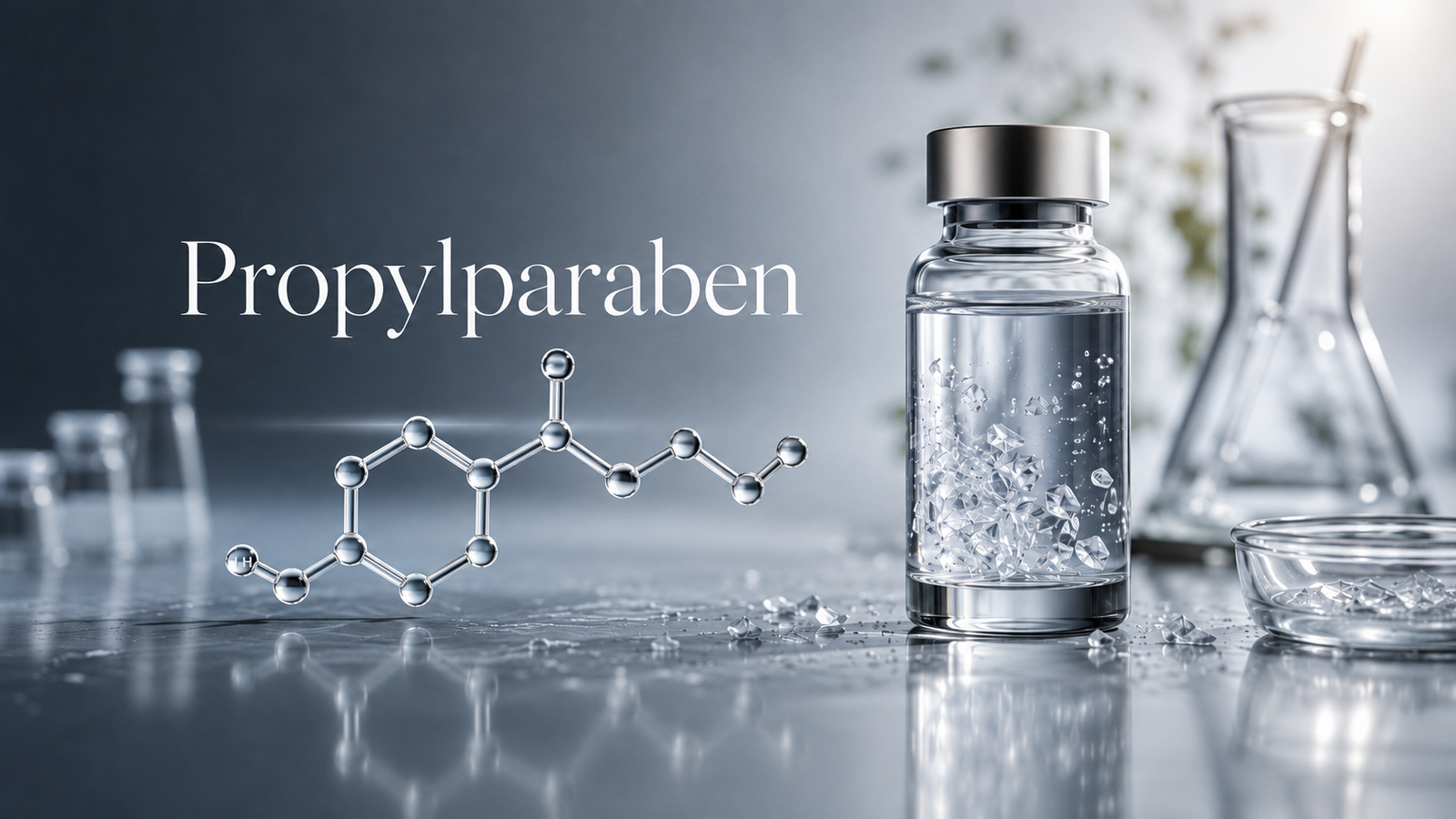
Propylparaben: The Preservative in the Tortilla Aisle That California No Longer Wants in Food
A packaged tortilla can remain soft and apparently fresh long after an unpreserved one would begin to spot with mold. That extended shelf life is convenient, especially for families buying in bulk. But in some tortillas, pastries, frostings, and other baked goods, the protection has historically come from propylparaben, a preservative whose safety record now sits at the center of a widening conflict between federal food policy, state lawmakers, and modern endocrine science.
California has already made its judgment. Beginning January 1, 2027, foods containing propylparaben cannot legally be manufactured, distributed, or sold in the state. The chemical was included in the California Food Safety Act alongside potassium bromate, brominated vegetable oil, and Red Dye No. 3. It was the first state law of its kind in the United States.
The federal government has not imposed the same prohibition.
That disagreement raises a harder question than whether a single tortilla is dangerous. What happens when a preservative remains legally usable under an old regulatory framework, while newer biological evidence suggests it can interact with hormone-sensitive systems?
Propylparaben aka propyl p-hydroxybenzoate: A Quiet Ingredient in Familiar Foods
Propylparaben, also called propyl p-hydroxybenzoate, is part of the paraben family of antimicrobial preservatives. It slows the growth of mold and some bacteria, helping packaged foods survive transportation, warehouse storage, and long periods on store shelves.
Consumer Reports, drawing partly on Environmental Working Group product data, has identified propylparaben in dozens of grocery products, particularly packaged corn tortillas, desserts, pastries, and cake icing. Product formulations change, so any database is a snapshot rather than a permanent inventory. The ingredient list on the package remains the most reliable evidence for a specific product.
Under the US Code of Federal Regulations, propylparaben is considered generally recognized as safe for certain food uses when used according to good manufacturing practice, with a maximum level of 0.1 percent in food.
That legal status sounds more definitive than it is.
“Generally recognized as safe,” or GRAS, describes a regulatory category. It does not mean that every authorized substance has been repeatedly retested with the endocrine, reproductive, and developmental methods used today. Consumer Reports has reported that the foundational federal review of propylparaben dates back decades, predating many current approaches to endocrine-disrupting chemicals.
The FDA now maintains a public inventory of food substances and a list of selected chemicals under active review. Those initiatives show that the agency recognizes the need for post-market reassessment, but the existence of a review system does not itself resolve the evidence surrounding propylparaben.
What “Mimics Estrogen” Actually Means
Propylparaben is often described online as an estrogen mimic. That phrase is directionally useful but scientifically incomplete.
The chemical has demonstrated estrogenic activity in experimental settings. In practical terms, its molecular structure may allow it to interact with pathways that ordinarily respond to estradiol, one of the body’s primary estrogens. That does not mean propylparaben behaves identically to natural estrogen, or that every exposure produces a measurable hormonal effect.
Potency, dose, timing, metabolism, tissue sensitivity, and simultaneous exposure to other chemicals all matter.
The most concerning research involves reproductive or developmental windows, when relatively small hormonal signals help organize ovulation, implantation, placental development, fetal growth, and later reproductive function. Recent laboratory studies have reported effects on human trophoblast cells, which are involved in placental development, and adverse reproductive outcomes in animal or cell models.
A 2024 study using human extravillous trophoblast cells found dose-dependent cellular toxicity and disruptions in biological processes associated with pregnancy development. The experiment does not prove that eating a food containing propylparaben causes pregnancy complications in humans. Cell cultures are simplified systems, and experimental concentrations may not reproduce ordinary dietary exposure. Still, the study adds to the biological plausibility of reproductive concern.
Other research has linked measured propylparaben exposure with changes involving estradiol secretion and ovulation. Here, too, causation is difficult to establish. Human beings encounter parabens through cosmetics, personal care products, medicines, and food, making it hard to isolate a single source or reconstruct exposure during a critical biological period.
The responsible conclusion is narrower than many social-media warnings and more serious than industry reassurance: propylparaben has shown endocrine and reproductive effects in experimental research, while the human health consequences of typical dietary exposure remain insufficiently defined.
That uncertainty is not proof of safety. It is also not proof that ordinary consumption causes infertility or developmental harm.
Europe Drew the Line Earlier on Propylparaben
In 2004, the European Food Safety Authority concluded that it could establish an acceptable daily intake for methylparaben and ethylparaben, but not for propylparaben. The panel cited concerns about reproductive findings, including effects observed in male rats, and excluded propylparaben from the acceptable daily intake group.
Propylparaben is not authorized as a food additive in the European Union today.
The contrast with the United States is often summarized as "Europe bans what America allows,” but the real difference lies in regulatory architecture. EU additives must be specifically authorized for defined uses and are subject to systematic re-evaluation. US law contains multiple pathways, including GRAS, through which substances may remain in use without the kind of recurring, mandatory reassessment that consumers might assume has occurred. EFSA describes its food-additive program as an ongoing process that examines toxicology, exposure, reproductive effects, and new scientific information.
Neither system is infallible. The European decision also rests partly on animal evidence and the precautionary principle in the face of uncertainty. But it answers uncertainty differently.
The US approach tends to ask whether evidence is strong enough to remove an established ingredient. The European approach more often asks whether the available evidence is strong enough to continue authorizing it.
That distinction can determine which party carries the burden of proof.
California’s Ban Became a Federal Stress Test
When California enacted its food-safety law in October 2023, it did more than prohibit four chemicals. It challenged the idea that federal approval should automatically settle questions about food additive safety.
Consumer Reports documented how the law could affect products far outside California. Manufacturers rarely want separate formulations for one state and the rest of the country. A large market can therefore create a de facto national standard, even without federal action.
Other states soon considered similar restrictions, citing the same concerns: old approvals, limited post-market reassessment, and differences between US and European rules. Industry organizations countered that state-by-state bans could create inconsistent standards, increase compliance costs, and cause public confusion about ingredients already permitted under federal law.
Both arguments expose a genuine governance failure.
A patchwork of state rules is an awkward way to manage national food chemistry. But when federal reassessment moves slowly, state legislatures become an alternative route for acting on emerging evidence. The resulting conflict is not simply science versus politics. It is one political system responding to the perceived inertia of another.
California gave manufacturers more than three years to reformulate. That transition period weakens the argument that propylparaben is technologically indispensable. Consumer Reports has noted that other preservatives, including sorbic acid and its salts, can perform comparable antimicrobial functions in many foods.
The harder question is why reformulation required legislation at all.
The Dose Problem Consumers Cannot Solve
A shopper can read “propylparaben” on an ingredient label. The label does not disclose the amount present.
That omission matters because toxicology depends on exposure, not merely presence. Two products can list the same preservative while containing very different concentrations. A person may also encounter propylparaben through several nonfood sources in the same day.
Without quantitative data, consumers cannot compare their exposure with experimental doses, regulatory limits, or an acceptable daily intake. In propylparaben’s case, Europe did not establish a current food-use intake threshold because the additive was not retained for authorization.
This is where traditional label reading reaches its limit.
Avoiding an ingredient is possible when its name is visible. Estimating cumulative exposure across food, cosmetics, medications, age, body weight, pregnancy status, and personal health context is not. Even clinicians rarely have the product-level concentration data needed to make that calculation.
A 2026 Consumer Reports and Yuka investigation illustrates the broader problem. Researchers tested 40 packaged foods for selected additives and contaminants and found that one-quarter contained an additive at a level exceeding a daily benchmark identified by US or European health authorities. The investigation did not establish that propylparaben was responsible for those findings, but it demonstrated why ingredient disclosure without concentration data can leave a major gap in risk interpretation.
What the Evidence Does, and Does Not, Support
The strongest defensible statements are these:
Propylparaben is an effective antimicrobial preservative used in certain tortillas, baked goods, desserts, and icings. Its use remains permitted under US federal rules, subject to specified conditions.
Experimental evidence indicates that propylparaben has estrogenic activity and can affect reproductive or developmental processes in cell and animal models.
The evidence does not establish that occasional consumption of a product containing propylparaben causes infertility, miscarriage, birth defects, or hormonal disease in humans.
At the same time, the absence of definitive human trials is not as reassuring as it might sound. Researchers cannot ethically randomize pregnant people or children to long-term exposure to a suspected endocrine-active preservative. Regulators must therefore make decisions using animal studies, mechanistic data, biomonitoring, observational research, and exposure estimates.
That is ordinary public-health science, not a lower form of proof.
Transparency Has to Become Personal
IngredientIQ's role becomes clearest at the point where conventional labeling ends.A static ingredient list can say that propylparaben is present. A useful transparency system should go further: identify why it is used, distinguish experimental findings from proven human outcomes, show how US and international regulators treat it, flag upcoming legal changes, and explain why an ingredient may matter more to some users than others.
For a shopper choosing between two packages of tortillas, the practical question is not “Is this chemical toxic?” Toxicity is rarely a yes-or-no property.
The better questions are:
Is the ingredient necessary in this product?
Is a comparable product available without it?
Does the user have a reason to apply greater precaution, such as pregnancy, fertility treatment, childhood exposure, or a clinician-directed effort to reduce endocrine-disrupting chemicals?
How current is the regulatory assessment?
IngredientIQ’s AI-driven personalization model is most credible when it avoids issuing universal verdicts. It should expose the evidence trail, preserve uncertainty, and let users set their own level of precaution. That approach differs from databases that assign a single alarming score without showing dose limitations, study design, or regulatory disagreement.
The distinction is accountability. A warning should be traceable. So should reassurance.
A More Useful Consumer Response
Consumers do not need to discard every packaged food containing a paraben. Nor should they assume that “paraben-free” automatically means healthier. Replacement preservatives have their own exposure profiles, and poorly preserved food can create real microbial hazards.
A proportionate response is to check ingredient lists on packaged tortillas, pastries, dessert toppings, and shelf-stable baked goods. When similar products are available without propylparaben, choosing the alternative reduces exposure without requiring major dietary change.
Pregnant people, parents, and those receiving fertility care may reasonably apply a more precautionary standard, while recognizing that the evidence does not support panic over a past exposure. Clinicians should avoid converting laboratory signals into unsupported diagnoses, but they can help patients reduce avoidable exposures when substitutes are practical.
Journalists have a different responsibility: ask manufacturers whether propylparaben is still used, in which products, at what concentration, and whether national reformulation is planned before California’s January 2027 deadline.
The deeper story is not one preservative. It is a regulatory system that often gives the public an ingredient name but withholds the information needed to interpret it.
What Happens Next
California’s deadline is approaching. By January 1, 2027, manufacturers selling food in the state must have removed propylparaben or withdrawn affected products from that market. The most likely outcome is broader reformulation, since maintaining separate national and California recipes adds cost and complexity.
That could make the legal debate seem resolved before federal regulators formally reconsider the substance of the issue. But quiet reformulation creates another accountability problem. Companies may remove an ingredient without explaining why, what replaced it, or whether products sold elsewhere changed at the same time.
Ingredient transparency should document those transitions, not merely celebrate an “additive-free” label.
The final question is therefore not whether propylparaben is good or bad. It is whether consumers should have to wait for a state ban to learn that an everyday preservative has been the subject of reproductive concern, international restriction, and decades of scientific dispute.
For many shoppers, that information would have changed the purchase long before the law did.
Take Action
Consumers:** Scan packaged tortillas, pastries, icings, and baked desserts for “propylparaben” or “propyl p-hydroxybenzoate.” Compare similar products and use IngredientIQ’s evidence trail to choose the level of precaution that fits your household.
Health professionals:** Discuss exposure to endocrine-disrupting chemicals without overstating causality. Focus on practical, low-burden substitutions for patients in sensitive reproductive or developmental periods.
Journalists:**Press manufacturers and regulators for concentration data, reformulation timelines, replacement ingredients, and the scientific basis for continuing federal authorization. Follow IngredientIQ’s social platforms for early access to ingredient analyses, regulatory updates, and continuing coverage of the chemicals hidden in ordinary food.
#Propylparaben #FoodAdditives #IngredientTransparency #EndocrineDisruptors #FoodSafety #ConsumerHealth #TortillaIngredients #ReproductiveHealth #CaliforniaFoodSafetyAct #CleanLabel #FoodRegulation #IngredientIQ