
What good is a model if it can’t survive contact with the real world?
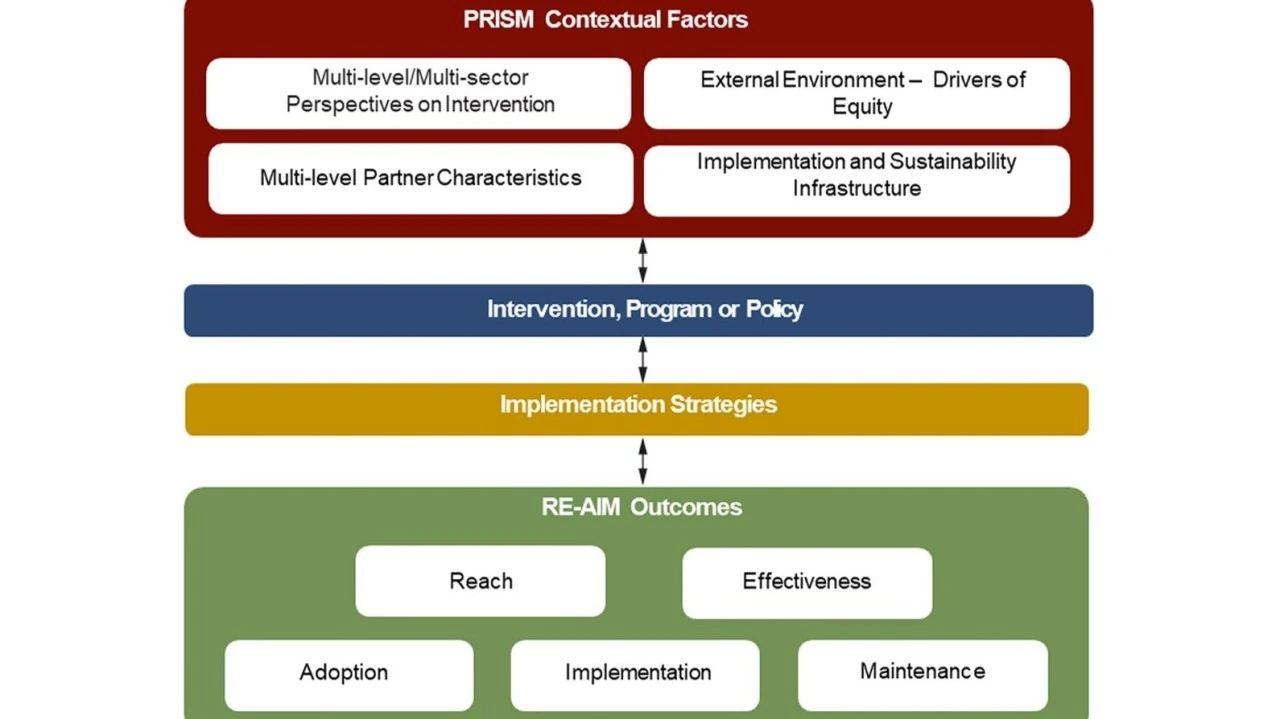
In theory, the PRISM framework — Practical, Robust Implementation and Sustainability Model — is healthcare’s best shot at lasting change. By integrating the outcome-driven focus of RE-AIM (Reach, Effectiveness, Adoption, Implementation, Maintenance) with context-aware domains like organizational culture, resource capacity, and policy alignment, PRISM offers a blueprint for meaningful, enduring interventions.
But in practice, even the most promising initiatives deteriorate once the ink dries on the grant report.
In 2023, a Midwestern health system launched a PRISM-informed initiative to improve hypertension management in underserved populations. Year one looked solid: outreach met targets, provider buy-in was high, and new electronic protocols were in place. But by year two, the intervention unraveled. Staff turnover left data entry gaps, patients reported confusion around medication changes, and no one could locate the original contextual analysis that informed the rollout. The framework hadn’t failed. The system had stopped tending to it.
Healthcare's Sustainability Crisis: Why PRISM Stalls Without Dynamic Infrastructure
PRISM’s strength lies in marrying RE-AIM’s metrics with the realities of delivery settings. But implementation science researchers are increasingly sounding the alarm: frameworks like PRISM are being “performed,” not lived.
A 2024 study published in Implementation Science Communications analyzed 58 PRISM-modeled healthcare interventions across five countries. It found that fewer than 20% included ongoing context reassessment beyond initial deployment, and less than 10% adapted implementation supports in response to organizational changes. Source: IS Communications, 2024
Translation: the scaffolding is static, while the environment keeps shifting.
What Regulators Are Starting to Notice
In a parallel move, the FDA has begun tightening oversight on post-market implementation fidelity — particularly for digital health tools embedded in clinical workflows. In May 2024, it issued a warning to a major EHR-integrated CDS (clinical decision support) tool developer for “contextual drift”: the tool’s algorithm had not been recalibrated despite changes in treatment protocols and patient demographics.
The lesson? Sustainability isn’t just about staying funded. It’s about staying accurate.
IngredientIQ: Building Living Infrastructure for Sustainability
At IngredientIQ, we don’t treat sustainability as a noun. It’s a verb. A practice. A feedback loop.
Where most PRISM-based deployments stall is where we begin:
- Dynamic Context Tracking: We continuously update contextual factors using regulatory signals, ingredient traceability, and formulation shifts — tied to actual usage environments.
- Decentralized Data Integrity: We ensure that source data (from ingredient labeling to clinical metadata) doesn’t degrade over time — especially when systems change hands.
- Cross-Sector Interoperability: Our tech isn’t locked into one framework. It can read and adapt across RE-AIM, PRISM, CFIR, and regulatory schema from the FDA , European Food Safety Authority (EFSA), and #FSANZ.
Healthcare settings demand tools that respond in real time to shifting baselines. We’re not patching a failing model. We’re giving it sensory feedback.
Questions Worth Asking
- If a PRISM implementation no longer matches its original context, is it still ethical to call it sustainable?
- How many “evidence-based” interventions are still running on stale evidence?
- When consumer-facing products claim clinical backing, who’s verifying that the science hasn’t aged out?
Every one of these questions underscores the same fracture: implementation without refreshment becomes obsolescence with a policy gloss.
The IngredientIQ Standard
We make every claim traceable. Every update accountable. Every stakeholder able to interrogate the current state, not just the planned one.
Because in healthcare, implementation isn't just about what works — it's about what keeps working.
Call to Action
- Health Professionals: Get early access to adaptive labeling tools and compliance audits for contextual drift in clinical environments.
- Regulators & Policymakers: Join our traceability beta to see real-time alignment with FDA/EFSA frameworks in action.
- Journalists: Dive into our source-mapped investigations on where sustainability models go dark after deployment.
#ImplementationScience #PRISMframework #RE-AIM #HealthcareSustainability #DigitalHealthOversight #FDAmonitoring #IngredientTransparency #ClinicalContext #LabelingDrift #HealthEquity #TraceableIntervention #IngredientIQ #PRISM #DigitalHealth